How Phubbing Quietly Breaks Emotional Connection
You’re mid-sentence. Telling your partner about a rough day, a strange dream, something small and human. Then you see it - the quick glance down. The thumb swipe. The half-nod that means they heard maybe two words of what you said. That’s it. That’s the whole rupture, right there, in three seconds.
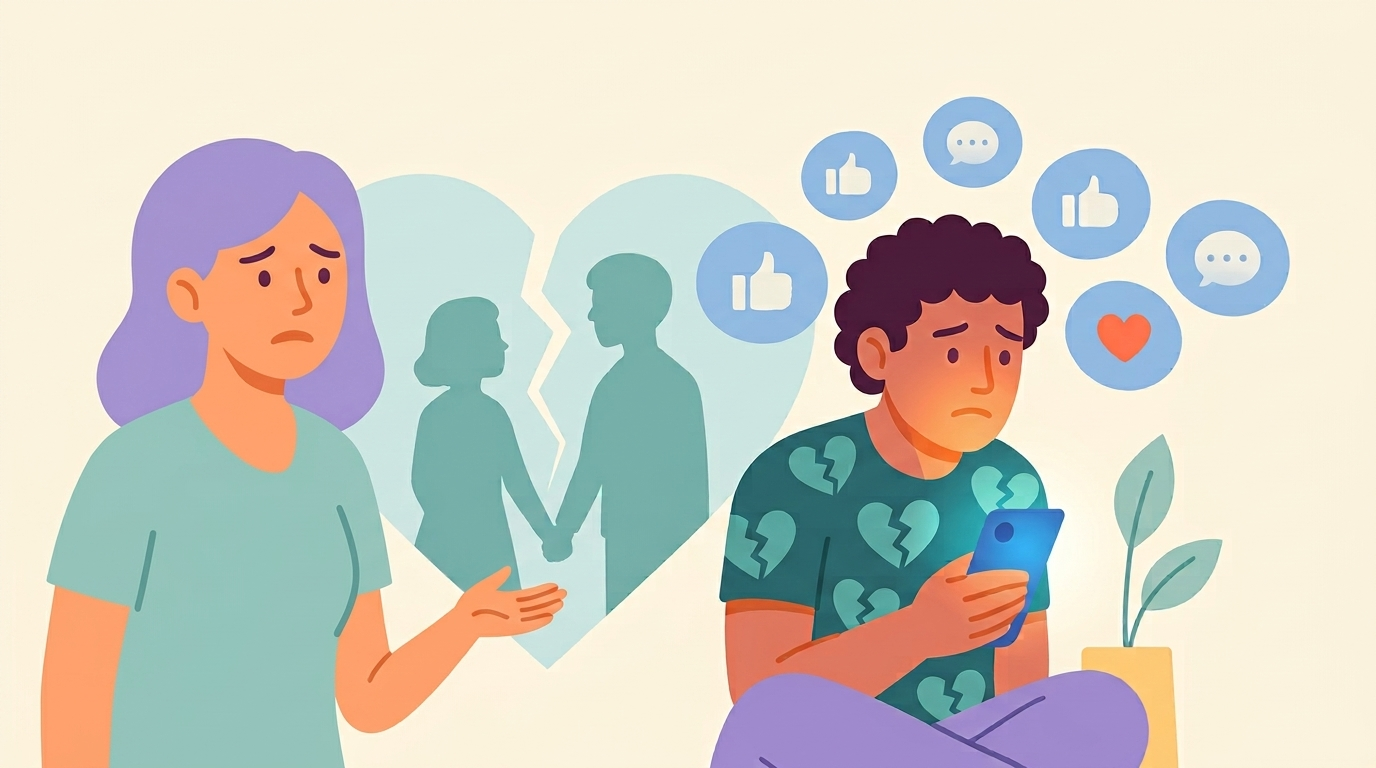
Couples rarely walk into my office and say “the phone ruined us.” They say things like “we just don’t talk anymore” or “I feel like a roommate.” But when I ask them to describe a typical evening, the phone is always the third person in the room. Once you understand the phubbing meaning behind that scene, you start seeing it everywhere.
Author’s Note: I’ve spent over a decade as a licensed marriage and family therapist in the US, working almost exclusively with couples untangling digital-age disconnection. What follows comes from sessions, not surveys - though the surveys back it up too.
What Phubbing Really Means in Modern Relationships
Ask most people what is phubbing and they’ll laugh, half-recognizing themselves. It’s not one dramatic betrayal. It’s a thousand tiny ones, stacked so quietly you don’t notice the pile until it’s taller than the relationship itself.
Here’s the mechanism, stripped down: attention is finite. When your eyes drop to a screen mid-conversation, your partner’s nervous system registers something specific - not boredom, but dismissal. Do that enough times and the brain starts bracing for it. That bracing has a name in attachment theory: hypervigilance to rejection cues.
The Definition of Phone Snubbing
The phubbing definition is disarmingly simple: snubbing someone in your physical presence by giving your phone attention instead. No malice required. No conscious decision to hurt anyone. Just a habit loop, repeated until it becomes the relationship’s background noise.
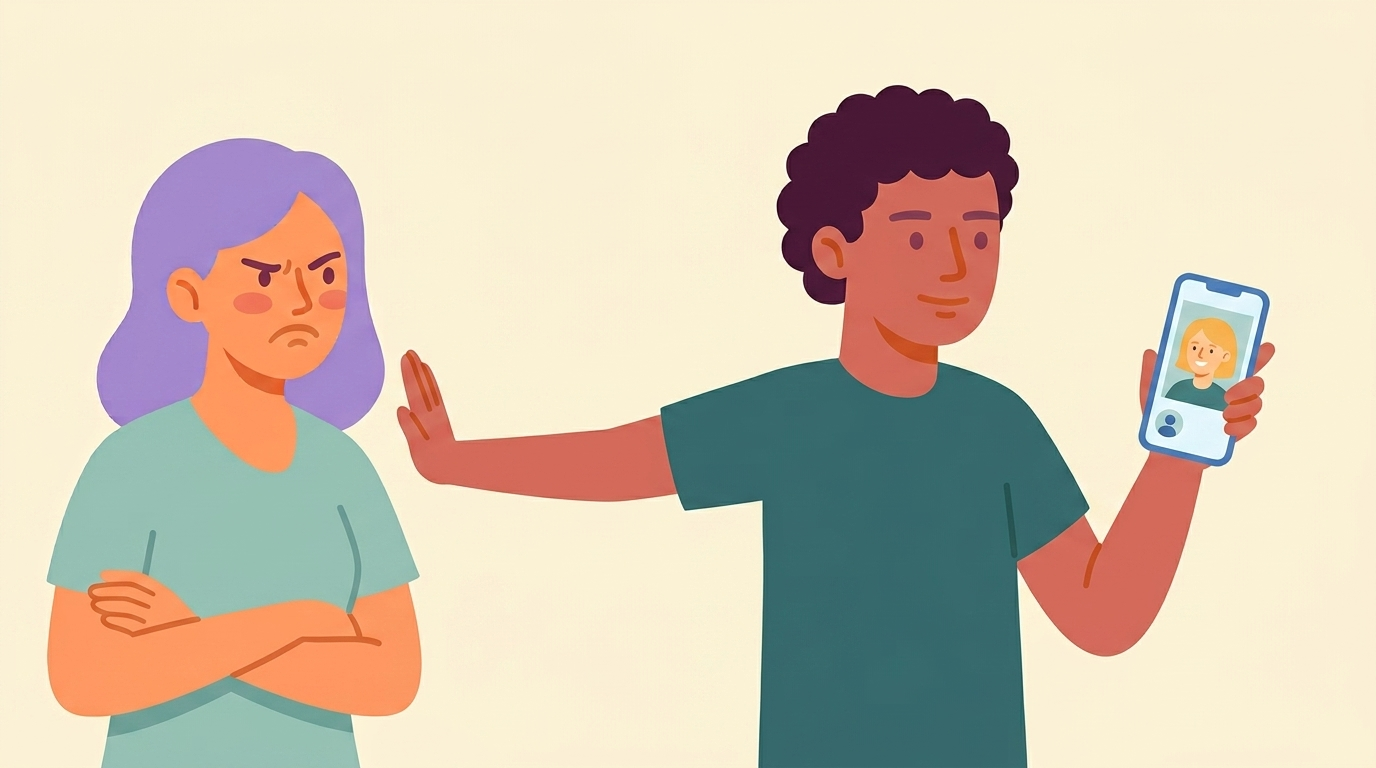
If you’re wondering what does phubbing mean in practical terms - picture checking Instagram while your partner recaps their day, or glancing at a text notification mid-hug. Small. Forgettable, individually. Devastating, cumulatively.
Why We Choose Screens Over Real Presence
Here’s the uncomfortable part. Screens are easier than people. A notification promises a quick hit of novelty - dopamine released not by the content itself but by the anticipation of it. A partner, meanwhile, might need patience. Eye contact. The willingness to sit with an awkward silence instead of filling it.
Your brain, given the choice between predictable micro-rewards and the harder work of intimacy, will often pick the phone. Not because it loves the phone more. Because the phone asks nothing of you, and your partner - inevitably, fairly - does.
The Hidden Impact of Phubbing on Relationship Dynamics
Ask what is phubbing in a relationship over the long haul, and the answer stops being cute or minor. A meta-analysis pooling 52 studies and nearly 20,000 participants found that partner phubbing correlates significantly with attachment anxiety, avoidance, and - strikingly - compulsive media use as its strongest predictor. This isn’t fringe behavior anymore. Chronic phubbing marriage patterns are baked into how modern couples fight, withdraw, and slowly stop reaching for each other.
Erosion of Trust and Active Listening
Active listening requires more than ears. It requires a body that’s present - leaning in, tracking micro-expressions, responding in real time. Phubbing sabotages every part of that. Partial attention produces partial responses, and partial responses, over months, read as “I don’t really see you.”
Trust doesn’t collapse in one moment, usually. It erodes the way a riverbank erodes - invisible day to day, catastrophic once you notice the shoreline’s gone.
The Vicious Cycle of Mutual Disconnection
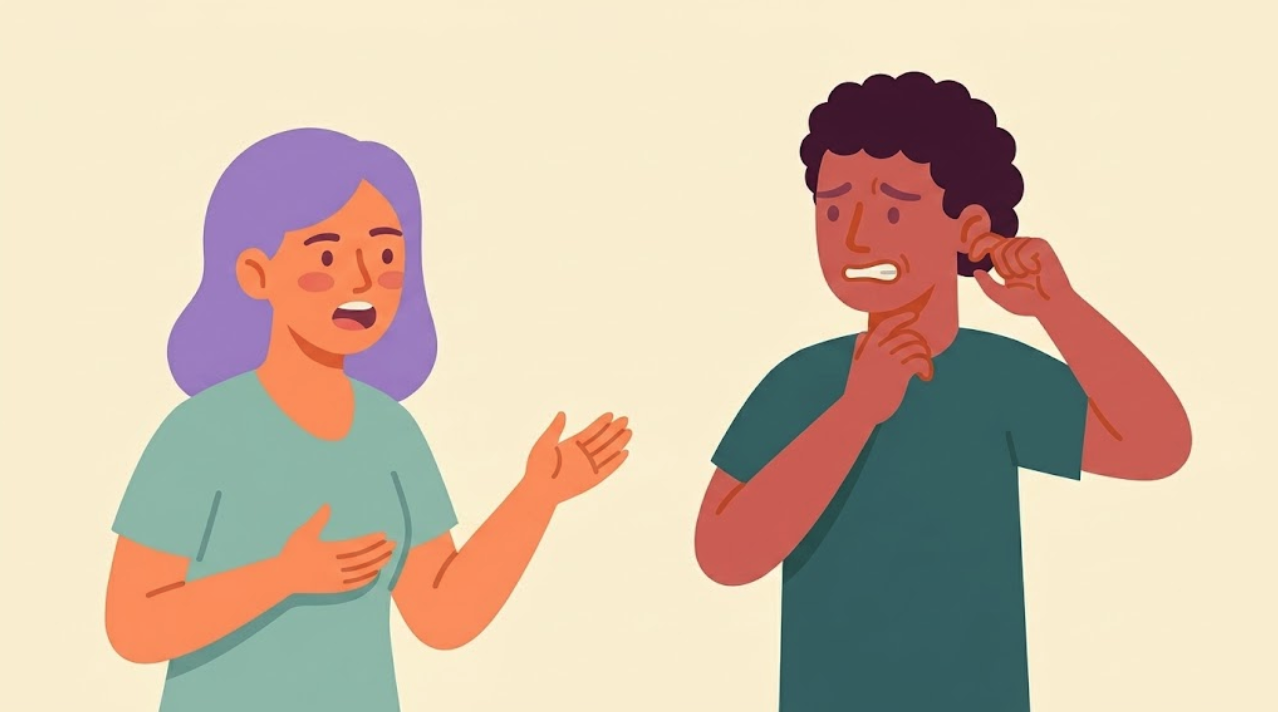
This is the part that surprises people most. Phubbing rarely stays one-sided. Get ignored enough times mid-conversation and you’ll eventually reach for your own phone - partly hurt, partly retaliation you won’t admit to yourself. Now both of you are scrolling. Both technically in the same room.
This mirrored withdrawal is exactly why so many of my clients start looking for spaces where they can rebuild the habit of actually talking - really talking - before old patterns calcify further.
About YourSecret: yoursecret is an anonymous space for voicing desires and needs you’d normally swallow whole. It’s not a replacement for your relationship - more a rehearsal space for the vulnerability phone-numbed couples slowly forget how to offer each other.
Common Indicators of Everyday Phubbing
Picture Tuesday dinner. She’s recounting a tense meeting. He says “mm-hm” without looking up. She notices. Says nothing. Files it away. Multiply that scene by a few hundred, and you’ve got a marriage running on autopilot.
Other familiar scenes: scrolling in bed while your partner talks about their mother. Checking your phone at a red light instead of the person beside you. Answering a text before finishing a hug.
| Behavior | Everyday Phone Use (Healthy) | Chronic Phubbing (Destructive) |
|---|---|---|
| Reaction to notifications | Glances, then returns focus | Drops conversation mid-sentence |
| Eye contact | Maintained through most of the talk | Rare, brief, distracted |
| Conversation pauses | Comfortable, natural silences | Filled by reaching for the screen |
| Emotional presence | Responsive, attuned | Flat, delayed, or absent |
The line between the two columns isn’t the phone itself. It’s whether the person in front of you still feels like the priority. Pew Research’s survey of nearly 5,000 US adultsfound that roughly half of partnered adults say their significant other is at least sometimes distracted by their phone mid-conversation - this isn’t a niche complaint anymore, it’s the norm couples are quietly learning to live around.
Practical Ways to Rebuild Emotional Presence
None of this requires throwing your phone in a lake, however satisfying that image might be. Small, repeatable rituals do far more than dramatic gestures.
Setting Healthy Digital Boundaries Together
Pick zones, not rules imposed unilaterally - this has to be mutual or it breeds resentment. The bedroom, phone-free. The dinner table, phone-free. And try this one: the first twenty minutes after reuniting each day are device-free, no exceptions. That window resets the nervous system toward each other instead of toward whatever pinged while you were apart.
Couples working through this shift often find it easier with structured prompts and honest conversation starters - worth exploring if you decide to download app options built for rebuilding that muscle.
Cultivating Genuine Micro Moments
Reclaim eye contact. Actually look at your partner when they speak - not glance, look. Add small, wordless touches throughout the day: a hand on the shoulder, a moment of stillness before you both reach for your phones each morning. These micro-moments accumulate the same way phubbing does, just in the opposite direction.
Fun Fact: The word phubbing was coined in 2012 by an advertising agency, McCann Melbourne, as part of a campaign for the Macquarie Dictionary - and it stuck around far longer than most manufactured buzzwords do.
Frequently Asked Questions
What is the difference between normal phone use and phubbing?
Normal use is bounded - you check something and return your attention. Phubbing is the pattern of consistently prioritizing your device over the person physically present with you, regardless of what they’re saying.
Is phubbing considered emotional neglect or micro-rejection?
Most therapists, myself included, treat it as a form of micro-rejection. It’s rarely intentional cruelty, but the felt experience for the ignored partner is remarkably similar to being dismissed outright.
How do I talk to my partner about their screen addiction without arguing?
Lead with the impact, not the accusation. “I feel unseen when we’re together and you’re on your phone” lands very differently than “you’re always on your phone.”
Can chronic phubbing actually lead to divorce?
Research on phubbing in marriage links it to lower marital satisfaction, reduced intimacy, and higher conflict frequency. The documented effects of phubbing rarely stand alone as a divorce cause, but they compound with everything else already straining the relationship.
Why do people phub their partners even when they love them?
Love and habit operate on different circuits. Phubbing in relationships usually reflects compulsive smartphone use, not diminished affection - the behavior runs on autopilot long after the underlying attraction stays intact.
What is the most effective rule to stop phubbing today?
Phones face-down and silenced during any conversation that matters. It sounds almost too simple. It works because it removes the temptation entirely rather than relying on willpower mid-conversation.