How to Make Friends in Your 20s When You Feel Completely Lonely
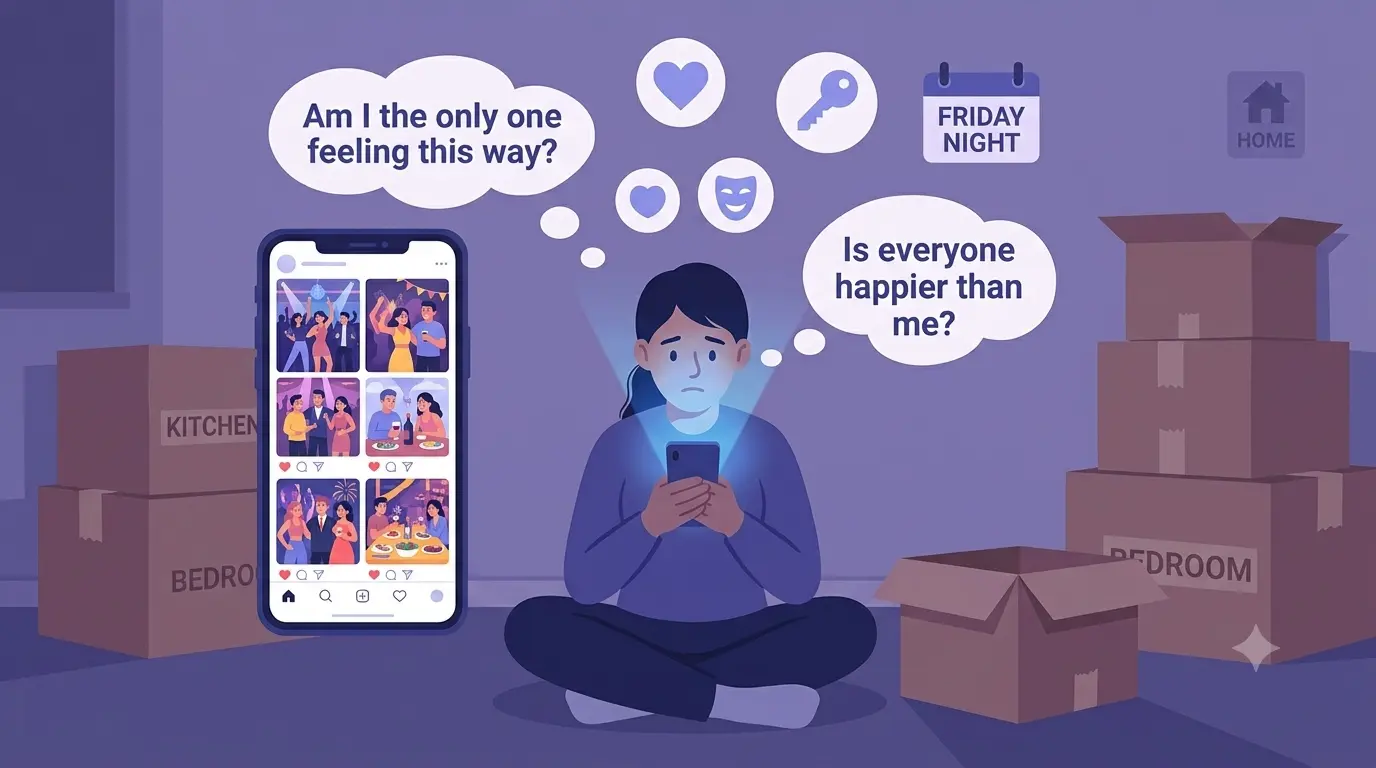
Twenty-two years old. You scroll through a contacts list stuffed with hundreds of names, yet Friday night arrives and there is literally no one to text for a quick drink. Sound familiar? Stop beating yourself up. This isn’t a personal failure. Nothing is fundamentally broken in your personality. Honestly, this is just the standard operating procedure for our generation. We grew up glued to screens, completely missing out on a manual for building offline ties. If the whole dilemma of how to make friends in your 20s has been chewing at your brain lately, keep reading. Forget the tired “just put yourself out there” nonsense. If you need real solutions, we are diving into actionable, grounded methods to build connections without mindlessly swiping or enduring agonizing small talk about the weather.
The Reality Check: Why Making Friends as an Adult is Harder than It Looks
The paradox hits hard. Think about campus life: a thousand students crammed into a single lecture hall. The dorms? A chaotic mess of noise all day and night. But inside, you just feel hollow.
feeling lonely in college creeps up exactly like this. Being physically surrounded by warm bodies rarely translates to actual closeness. You can sit shoulder-to-shoulder with five loud roommates and experience deeper isolation than if you were completely by yourself.
Once graduation hits, things do not magically smooth out. They get way harder. School basically acts like a giant, automated conveyor belt for random social contacts: schedules, clubs, and cramped dorms mechanically force you together. Then you enter adulthood, and somebody violently unplugs that conveyor belt.
Nobody is going to politely seat you at the exact same table with potential buddies every single weekday anymore. The harsh truth is that making friends as an adult requires deliberate heavy lifting in spaces where things used to just happen organically. Psychologists frequently point out that the sheer intensity of our friendly connections tends to peak somewhere between 18 and 29. Often, the random friendships you forged back in high school end up being the very last new ties you naturally make. After that window closes, your social circle starts shrinking entirely on its own-usually because people move, switch careers, or just change priorities.
Everyone’s social battery drains differently. But the bottom line won’t budge: as the years stack up, the burden of bringing fresh faces into your world falls entirely on your shoulders.
Navigating the Overwhelm: How to Make Friends as an Introvert
When the puzzle of how to make friends as an introvert comes up, please understand one thing right away. The goal of how to be more social as an introvert never involves faking an extroverted persona by Saturday night. It is about discovering your own specific tribe without burning out.
The reality of making friends with social anxiety starts with admitting that tiny groups beat massive gatherings every single time. Throwing yourself directly into a 40-person house party is a recipe for sensory overload. On the flip side, something like a six-person pottery workshop-or a mellow book club where folks take turns-provides a safe, low-stakes environment. In these spaces, you never have to shout to be heard.
Try these working principles:
Pick hobbies where interacting is baked into the actual activity. Think group cooking sessions, board games, or casual team sports. You completely bypass the awkward “trying to meet people” phase because chatting naturally flows while you tackle the task.
Decide on a strict time limit beforehand. Knowing the event ends at 9:00 PM makes sitting through it drastically easier. You won’t feel that sudden urge to bolt for the door after twenty minutes.
Guard your boundaries and drop the guilt. Ducking out early to recharge isn’t a tragic weakness; it is basic resource management. Real friends will always value your honesty about feeling drained way more than a fake smile forced until midnight.
Also, introversion is not a medical diagnosis or a barrier to deep relationships. The exact reverse is often true. People who speak less and listen fiercely tend to forge much thicker platonic bonds. Why? Because they pick up on tiny details that loud extroverts blast right past.
To make choosing your new “regular spot” easier, here is a breakdown of modern adult social environments based on how they impact your social battery and the types of connections they foster:
| Venue / Activity | Interaction Style | Social Battery Drain | Best Suited For | Built-in Icebreaker Example |
|---|---|---|---|---|
| Bouldering / Climbing Gyms | Problem-solving, intermittent | Low | Introverts needing a shared physical focus without constant eye contact. | “Are you working on this route? I can’t figure out the foot placement.” |
| Niche Volunteering (e.g., Animal Shelters) | Task-based, empathetic | Low to Medium | Finding peers who share your core ethical values and compassion. | “Which dog in this section has the wildest personality?” |
| Run Clubs / Casual Cycling | Side-by-side, pacing-dependent | Medium | Consistent weekly exposure; conversations naturally start and stop as you move. | “What’s your usual pacing, or are we just trying to survive today?” |
| Language Learning Classes | Structured, repetitive | Medium | Bypassing small talk through guided exercises and mutual mistakes. | “Did you understand the grammar rule, or are we both equally lost?” |
| Improv Comedy Workshops | Collaborative, forced vulnerability | High | Fast-tracking emotional bonds by collectively stepping out of comfort zones. | “I am absolutely terrified to go up next, how about you?” |
The Digital Shift: How to Make Friends Online
A logical next step is exploring the digital environment. Figuring out how to make friends online is no longer strange, considering half of our communication already happens in chats anyway.
The glaring problem is that most apps to make friends just ripped off dating platforms: swipe, judge a photo, and take three seconds to decide on someone. This broken format focuses on physical appearance and instant chemistry rather than actual compatibility. Your anxiety skyrockets as you evaluate yourself using the exact same ruthless metric that strangers use on you.
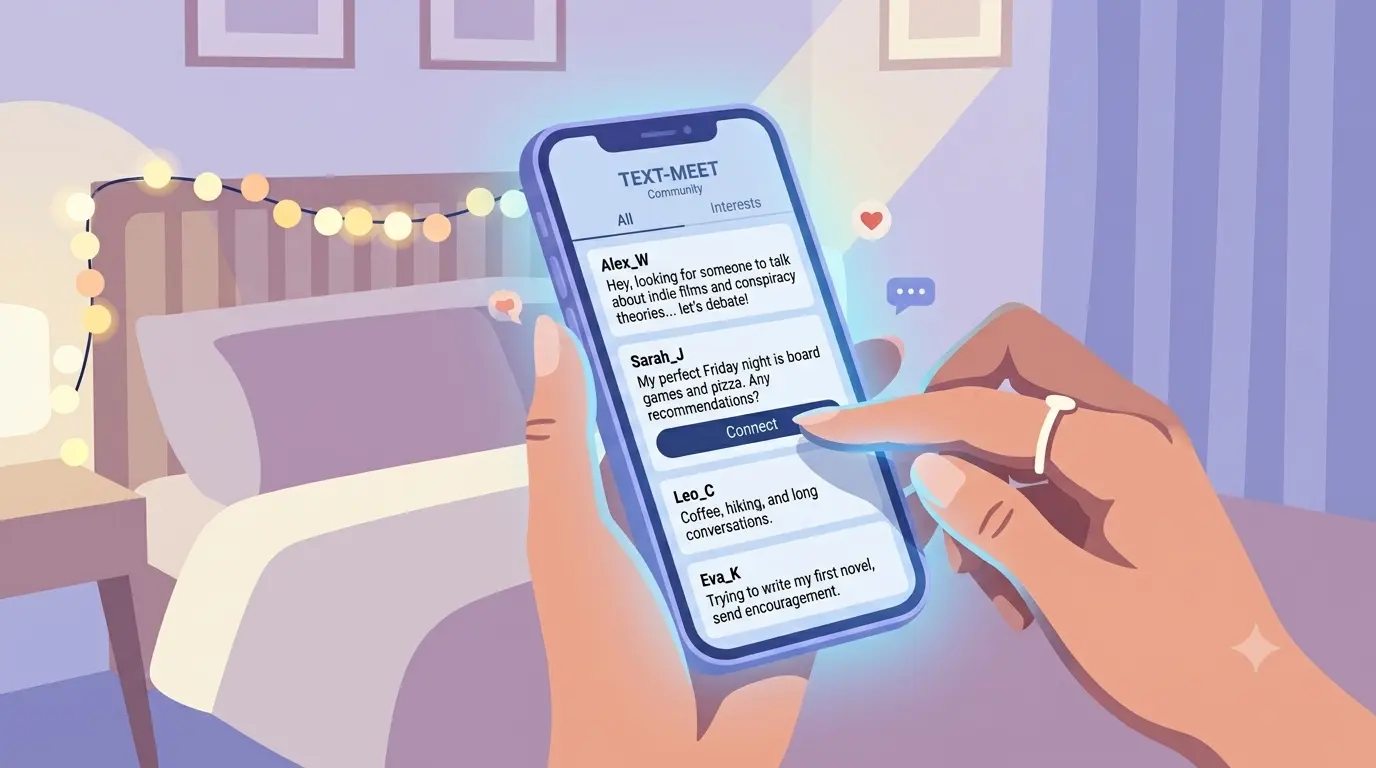
Thankfully, a much healthier alternative exists. When you decide to download app options to expand your circle, seek out platforms where you actually read a person’s thoughts long before you see their face. This completely flips the script. First, you establish a solid match in core values and humor; only then comes everything else. This radically reduces the crushing pressure and entirely eliminates the fear of not being photogenic enough.
4 Actionable Habits to Build a Genuine Social Circle
Here is exactly what you can start applying tonight, rather than indefinitely pushing it off.
Focus on Mindset over Looks
The absolute healthiest way to track down your people is to hunt for a solid match in raw thoughts before worrying about appearance. This is the exact foundational principle behind yoursecret. This private app kicks off interactions anonymously. Revealing your identity only happens when you actively choose to do so. This is mindset matching in full action: you slowly get to know a human being through what they genuinely feel inside. The built-in anonymity naturally strips away the paralyzing fear of judgment and creates a safe space.
Become a Regular Somewhere
Pick one highly specific local spot. Maybe the corner cafe, the dusty local library, or a shaded park trail. Physically show up there consistently around the exact same time. Striking up a bond with the tired barista or the guy sitting at the adjacent table isn’t magic. It is literally just the cold hard statistics of bumping into each other repeatedly. The more frequently people spot you in that context, the quicker the stranger morphs into a familiar face, and eventually into a buddy.
Learn to Ask Open-Ended Questions
Dropping a generic greeting almost always earns a flat reply, killing the chat dead in its tracks. Instead, throw out slightly unusual questions. “What was the wildest thing that happened to you this week?” These prompts invite the other person to share something entirely real. These tiny micro-moments shift flimsy connections into profoundly deeper territory.
Be Patient with the Process
Friendship in your adult years naturally grows at an agonizingly slower pace than it did back in school. That is a completely normal reality. Not every single pleasant acquaintance is obligated to transition into a close friendship. Give the messy process some actual breathing room. A couple of random encounters, combined with shared activities, topped off with one honest conversation. Give it a few months. Suddenly you have a person you can safely text at 3 AM.
Fun fact: Researchers over at the University of Kansas crunched the numbers and found it takes roughly 50 hours of shared time for a mere acquaintance to shift into a casual friend, and about 200 hours to become a close friend. This is just a couple of months of regular meetings once a week.
FAQ
Is it genuinely too late to make friends after you hit 25 or 30?
Not at all. The vast majority of rock-solid adult friendships actually kick off after 25. They simply form at a slower, more conscious pace than they did during student years.
What should you do when it feels like everybody else around is already locked into their own groups?
You are just looking at a classic illusion of density. From the outside, cliques look monolithic. Internally, they have extra room for fresh faces. You just have to be brave enough to take the initiative.
Is it actually possible to build a close friendship online if you don’t ever meet up in real life?
It is absolutely possible. But let’s be real: connections turn out significantly stronger where your digital communication is eventually supplemented by at least a few rare personal meetings.
How many new acquaintances do you realistically need to make just to get one real friend?
Based on psychological observations, one contact out of ten to fifteen naturally blossoms into a close friendship. This is why it is vital not to despair after a couple of awkward attempts early on.
How can you actually tell if a person fits the role of a true friend?
Pay strict attention to whether things remain perfectly easy after a long awkward pause. If you are genuinely ready to be honest about your own problems with them, that is the absolute main marker of compatibility.
Is having social anxiety a permanent obstacle to finding friendship?
No, it is simply a specific characteristic of your nervous system. By continuously practicing small, low-stakes social interactions, your baseline anxiety naturally decreases over time.