How to Overcome College Loneliness and Stop Missing Out
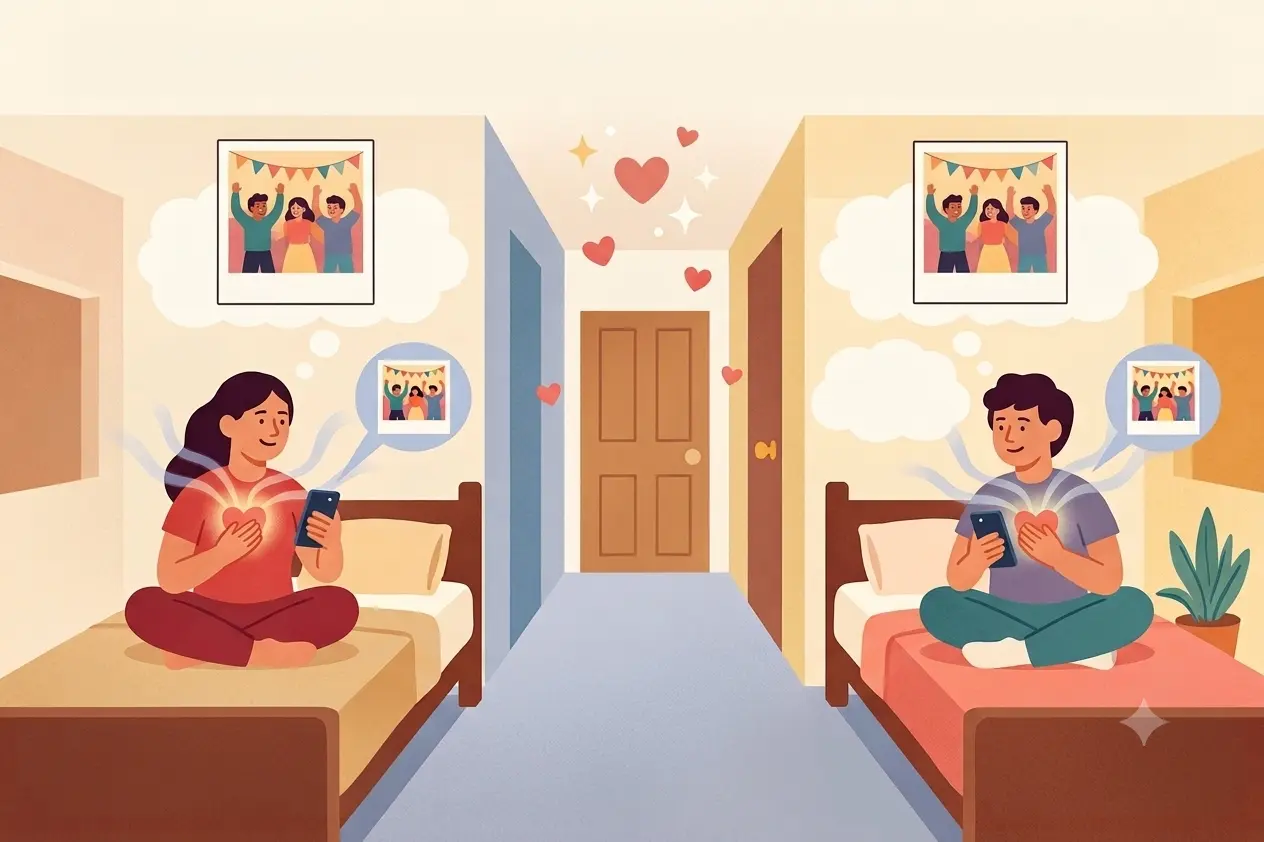
Sitting alone in your dorm room on a Friday night while photos from someone else’s party pop up in your stories is not a life sentence and not a diagnosis.
This is one of the most common fears of a freshman: “I have no friends in college, and it will always be this way.” Spoiler alert: it won’t.
For most people in the room across the hall, the exact same thing is happening right now-they are simply also scrolling through other people’s stories and thinking that they are the only ones. Adaptation is a process, not an exam that you fail in just one week.
What is FOMO and Why It Hits So Hard on Campus
To put it simply: understanding what is fomo is understanding that specific anxiety that somewhere right now something cool is happening, and you are not there. On campus, this feeling is magnified exponentially.
There are hundreds of new faces around, dozens of dorm group chats, and faculty activities every day-it is physically impossible to be everywhere, and the brain has a hard time accepting this fact.
You scroll through your feed, and suddenly you see a story from a party you weren’t invited to. This is classic social media fomo: other people’s highlights look like an endless celebration, while your reality feels like a quiet evening within four walls.
In practice, it often goes like this: a person compares their ordinary environment with someone else’s retouched “best moment”-and loses by definition, because comparing the rough draft of your life with someone else’s highlight reel is inherently unfair.
According to the Pew Research Center , almost half of teenagers today believe that social networks do more harm than good to their peers, and they name the constant comparison with other people’s feeds as one of the main reasons for this feeling.
When comparison becomes the background of your life, it turns into fomo anxiety-a state where your phone is in your hand, but there is no peace in your head. It is easy to recognize: you open the app not because you want to find out something specific, but simply so you don’t “miss out.”
When Loneliness in College Feels Overwhelming
The paradox is that loneliness in college can hit you even in a crowded dining hall. You can sit among three hundred people with a tray in your hands and feel invisible-simply because your old connections stayed at home, and the new ones haven’t had time to grow stronger yet.
This will pass, but right now, in the moment, it seems like it’s forever-and this is a normal, very human reaction to a change of environment.
Researchers who studied the connection between FOMO and adolescent behavior specifically note: the stronger the anxiety of missing out on something important, the higher the risk of compulsive phone scrolling instead of live communication-this is also confirmed by a scientific article in PMC about teenagers and problematic social media use.
Essentially, the more anxiously we scroll through the feed, the less energy and desire remains to approach a real person in a real dining hall.
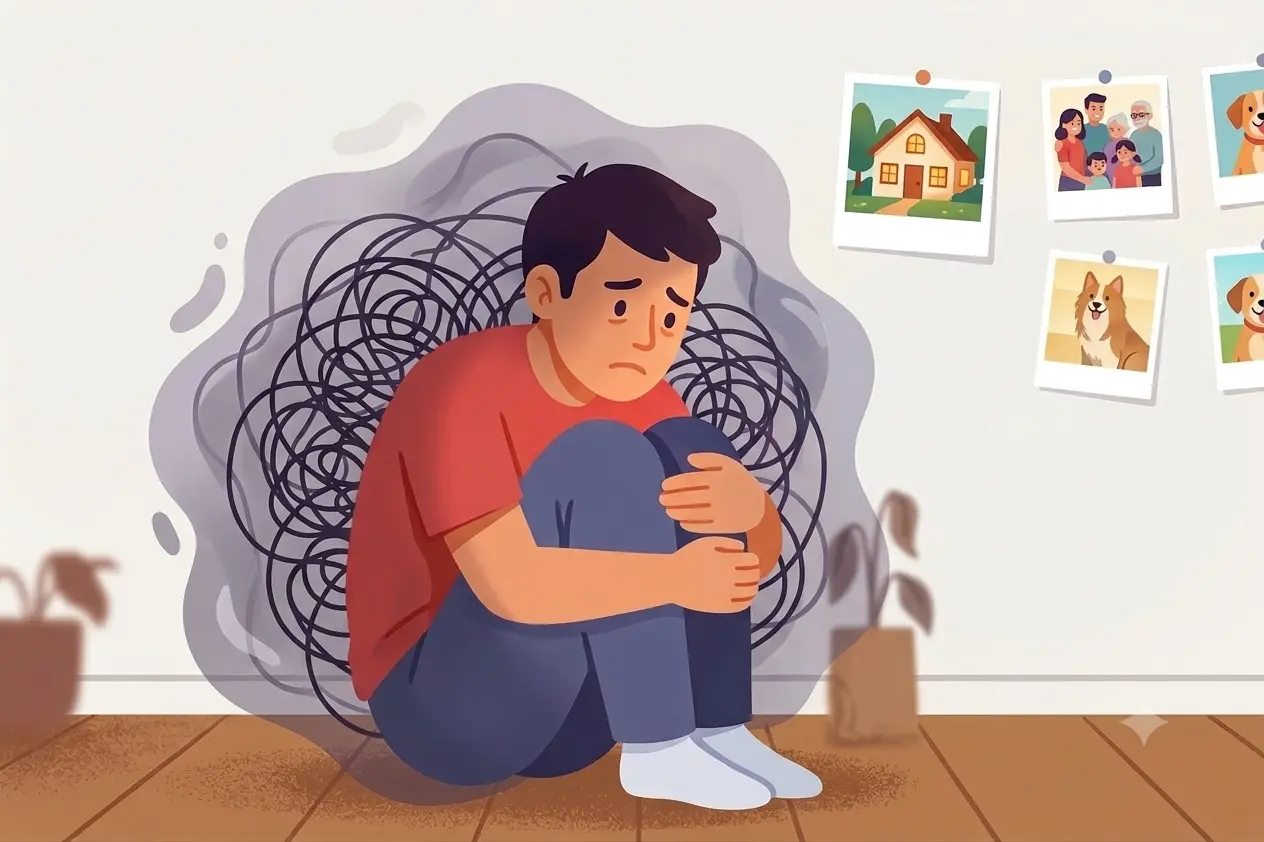
If you miss your mom’s cooking, the neighbor’s dog, or the sounds of your old room-that is normal. This is known as being homesick in college, and almost everyone goes through it, even the most sociable and self-confident people in your year.
Believe me, longing for home does not mean a weakness of character-it means that you had a good, reliable place in your past, and it is hard to let it go for a while.
It is worse when apathy lingers for more than a couple of weeks and does not recede on its own. If you notice that you are feeling depressed in college-you have no energy to get up, you lose interest even in things that used to bring you joy, and your sleep or appetite is disrupted-this is a signal to consult a university psychologist or at least talk about it with someone close.
Sometimes the brain just needs time to adapt, and sometimes it needs the support of a specialist. Asking for help here is not a sign of weakness, but a sign that you are taking care of yourself.
Thriving as an Introvert in College
Noisy parties are not the only path to a normal social life. Being an introvert in college means living by different rules, and that is absolutely okay, even if it seems like everyone around you is just running from one party to another.
Introverts have their own social battery: it charges in solitude and is drained by any communication, even the most pleasant and desired ones. When the battery is at zero, the best solution is not the next gathering, but a quiet evening with a book, a TV series, or simply silence without notifications. This is not running away from people; this is routine maintenance of yourself.
If your heart pounds during a group project and words get stuck in your throat-this is familiar to many and is called social anxiety in college. A little trick: prepare one or two conversation starters in advance-a cliché “how is your part of the project going?” takes away half the tension because you don’t need to invent an introduction on the fly.
Also, watch out for signs of social burnout-constant fatigue from texting, irritation from notifications, and the desire to turn off your phone for a day and not see anyone. This is a signal to slow down, not a symptom that you are “not social enough” or doing something wrong.
Social Battery Management: College Activity Guide
| Activity Category | Social Battery Drain | Typical Campus Setting | Ideal Mindset & Goal |
|---|---|---|---|
| Passive Co-existing | Low | Library study halls, campus cafes, quad benches | Being around others without the pressure to perform; feeling connected simply by sharing a space. |
| Structured Interaction | Medium | Academic clubs, study groups, intramural sports | Connecting over a shared objective with a built-in end time and predictable conversation topics. |
| Deep One-on-One | Medium to High | Coffee dates, walking between classes, dorm room chats | Building genuine emotional vulnerability and trust; focusing on connection quality over quantity. |
| Unstructured Socializing | High | Dorm parties, large off-campus mixers, crowded tailgates | Navigating spontaneous interactions and high sensory input; testing the waters with many new acquaintances at once. |
How to Make Friends in College Without Pressure
The most frequent question is how to make friends in college if it is scary to be the first one to approach strangers? The good news is that making friends in college does not have to be a stressful quest with a rigid schedule to “meet ten people in one evening” and a mandatory exchange of numbers.
Sometimes it is easier to start communicating in places where there is no visual pressure-you don’t need a perfect profile picture, and you don’t need to save face in public at a moment when you are tired or simply not in the mood.
Anonymous platforms are perfectly suited for this: for example, yoursecret is built around the idea of “thoughts first, face later.” You write about what really bothers you-whether it’s anxiety before exams or thoughts about home-and you find a person based on their internal vibe, rather than an Instagram filter.
You don’t have to stress about putting on a show or looking perfect. It just opens the door for real talk since nobody is judging your profile picture. If you want to try it without overthinking, you can immediately download the app and see how nice it is to chat with people without faking a flawless aesthetic.
Become a “Regular” Somewhere
Find a spot and claim it. Could be that weird little cafe just off campus, a hidden library desk, or a random bench by the science building. Just try to hang out there pretty often, maybe even around the exact same time every day. Give it a few weeks. The guy making your coffee will memorize your drink. The girl always sitting nearby might drop a quick “hey.” Next thing you know, someone’s asking about the book you’re holding. Connections made like this take zero networking effort. They just naturally happen. Seeing a familiar face kills the awkwardness way faster than any forced icebreaker ever could.
Learn to Ask Open-Ended Questions
Asking stuff like, “Are you liking this class?” is a total conversation killer. The other person mumbles “yeah,” and boom-you’re both stuck in dead silence. Try flipping the script. Ask, “What’s the craziest thing we’ve read for this course so far?” Now they actually have a reason to talk and tell a story. It’s a stupidly easy trick, but it wipes out those painful pauses. Plus, it gets even the quietest kids to open up.

Be Patient with the Process
Real friendships don’t just magically appear after one loud night in a stuffy dorm. They take months to actually stick. We’re talking bonding over bombing a midterm, weird chats in the food line, and nodding at each other in the halls until someone finally suggests grabbing tacos. Striking out your first week doesn’t mean you failed. That’s literally just how life works. Honestly, you should probably lean into JOMO (the joy of missing out). Sometimes staying in your room by yourself, completely guilt-free, is way better than forcing yourself to go to a party anyway.
Fun Fact
The term FOMO was coined not by psychologists, but by marketers: it first appeared in 2004 in an essay by a Harvard Business School student who described his classmates’ anxiety about missing a party, an internship, or an important connection-long before social networks made this feeling widespread and recognizable worldwide.
FAQ
How much time does it usually take to stop feeling lonely in college?
Finding your crowd takes way longer than movies make it look. You might not click with anyone until Thanksgiving or even winter break. Forming actual deep bonds? Plan on that taking the whole first year. Just give yourself grace and let the process happen naturally.
Is it normal not to go to parties and not suffer from it?
Absolutely. Nobody actually cares how many frat basements you cram yourself into. If you’d rather order pizza and play Mario Kart with two people, do that. Having a tiny circle of friends who genuinely care about you beats a massive list of fake acquaintances any day of the week.
How do I know that normal anxiety is turning into something more serious?
Watch the calendar. Feeling down for a few days is whatever. But if two or three weeks pass and you still can’t drag yourself to class, sleep is impossible, or you just feel completely empty inside-reach out for help. Walking into the student counseling center is a smart move, plus they keep everything completely confidential.
Do anonymous apps help to cope with loneliness?
They really do take the pressure off. You drop the worry about having the perfect profile picture and just talk about real stuff. People who hate the fake perfection of standard social media usually thrive there because they can finally just breathe and be themselves without maintaining an image.
What should I do if I miss home more than I expected?
Put your parents or siblings on a regular call schedule. Recreate your old daily routines where you can. And please, put some effort into your dorm walls. Unpack your photos, grab your ugliest comforting childhood blanket, and find a room spray that smells like your old house. Your brain needs to recognize the space as safe and yours.
How do I distinguish healthy JOMO from isolation?
Check your motives. JOMO feels like a massive relief-you stay in, watch a movie, recharge, and wake up ready to text people again. Isolation feels heavy. That’s when you skip events purely out of panic, avoiding the world because facing it feels impossible. Taking a breather is perfectly fine; hiding in your room to escape life is the danger zone.