Why Anonymous Mental Health Chat is Key to Biological Connection
A General Theory of Love: Why It Matters
How can an anonymous mental health chat satisfy our deep, biological need for human bonding? This question lies at the heart of A General Theory of Love, a groundbreaking book by Thomas Lewis, Fari Amini, and Richard Lannon. First published in 2000, it blends neuroscience, psychology, and philosophy to explore one central truth: whether in person or seeking online emotional connection, human beings are biologically wired for love and empathy.
Far from being just a poetic metaphor, love is a measurable, physical force that molds our minds, bodies, and destinies.
The Science of Love: Beyond Poetry
For thousands of years, love was considered the domain of poets and philosophers, too mysterious for science. But modern neuroscience has revealed that love is not just an emotion — it’s a vital biological process.
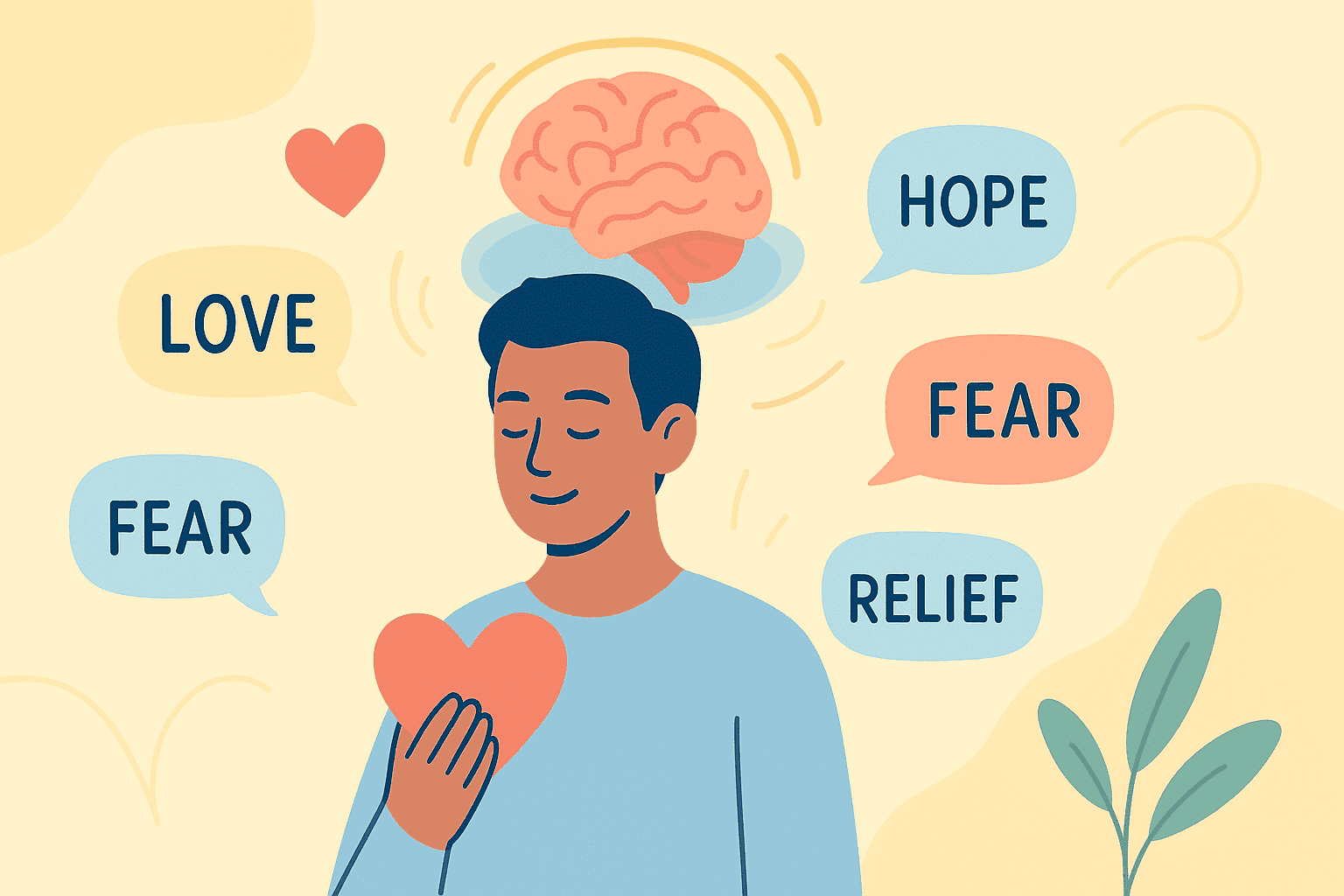
The authors argue that our emotional lives are rooted in the brain’s limbic system, which governs bonding, attachment, and empathy. This system is ancient and powerful, shaping how we connect with others in ways that thought and logic alone cannot.
As Blaise Pascal once wrote, “The heart has its reasons which reason knows nothing of.” Science now shows us he was right.
Limbic Resonance: How We Tune Into Each Other
Partners in love synchronize their heartbeats and breathing. Users on an anonymous venting app “catch” each other’s moods and feel shared relief when reading someone else’s truth. This constant emotional exchange means we are never truly isolated. When we find a safe space online, our nervous systems are in dialogue with those around us, proving that digital empathy is real.
This constant emotional exchange means we are never truly isolated — our nervous systems are in dialogue with those around us. Love, then, is not just a feeling but a physiological state that requires connection.
Why Relationships Shape Who We Become
According to A General Theory of Love, relationships are not optional — they are essential to mental and physical health. From infancy, the presence or absence of love literally sculpts the brain.
- Secure attachment in childhood: fosters resilience, empathy, and emotional stability.
- Neglect or trauma: can impair the brain’s ability to regulate emotion, leaving lasting scars.
- Close adult bonds: continue to alter our biology, stabilizing rhythms of mood and shaping identity.
In short: who we love, and who loves us, determines who we are.
Why Modern Culture Gets Love Wrong
The book critiques modern society’s tendency to overvalue logic and undervalue emotion. Schools teach math and history but rarely teach how to connect, empathize, or love. Workplaces reward analysis over intuition, leaving many people struggling with loneliness, failed relationships, and unfulfilled lives.
Suppressing or ignoring the emotional brain doesn’t make us stronger — it makes us disconnected from our true nature. As the authors put it, “Emotional life can be influenced, but it cannot be commanded.”
Healing Through Anonymous Peer Support
The authors emphasize that healing from emotional wounds requires more than reason. Finding a safe space to talk about mental health—even digitally—can help repair the emotional brain. Platforms offering an anonymous chat for anxiety or depression engage the limbic system through trust, empathy, and peer attunement, proving that healing is a relational process. Healing, they argue, is not merely an intellectual exercise but a relational process.
Why This Matters Today
In an era of rising loneliness, digital overload, and fragile social bonds, A General Theory of Love feels more relevant than ever. It reminds us that human well-being depends not just on achievement, but on authentic emotional connection.
Understanding that our brains are built for love — and suffer without it — helps us see relationships not as luxuries, but as biological necessities.
Looking Ahead: Love, Science, and the Future of Connection
What if technology could finally catch up to our biology? Instead of mindless scrolling, what if you could use an anonymous mental health app that provides real emotional resonance? Platforms like YourSecret prove that an anonymous support chat doesn’t just provide distraction—it actively helps people connect in ways that support true mental wellness. These tools are designed to help us better understand ourselves, our emotions and overcome digital loneliness.
Final Thoughts
A General Theory of Love is more than a book about relationships — it’s a map of the human heart. It shows that love is not just poetry, but biology; not just romance, but survival. Our moods, our resilience, even our identities depend on the people who surround us.
If you’ve ever wondered why love matters so much — or why loneliness hurts so deeply — this book offers profound, science-backed answers.
And as science and technology continue to evolve, the mysteries of love may soon become not only understandable, but something we can nurture in new, transformative ways.