Anonymous Chat & Safety: Avoiding Social Media Fraud in US Colleges
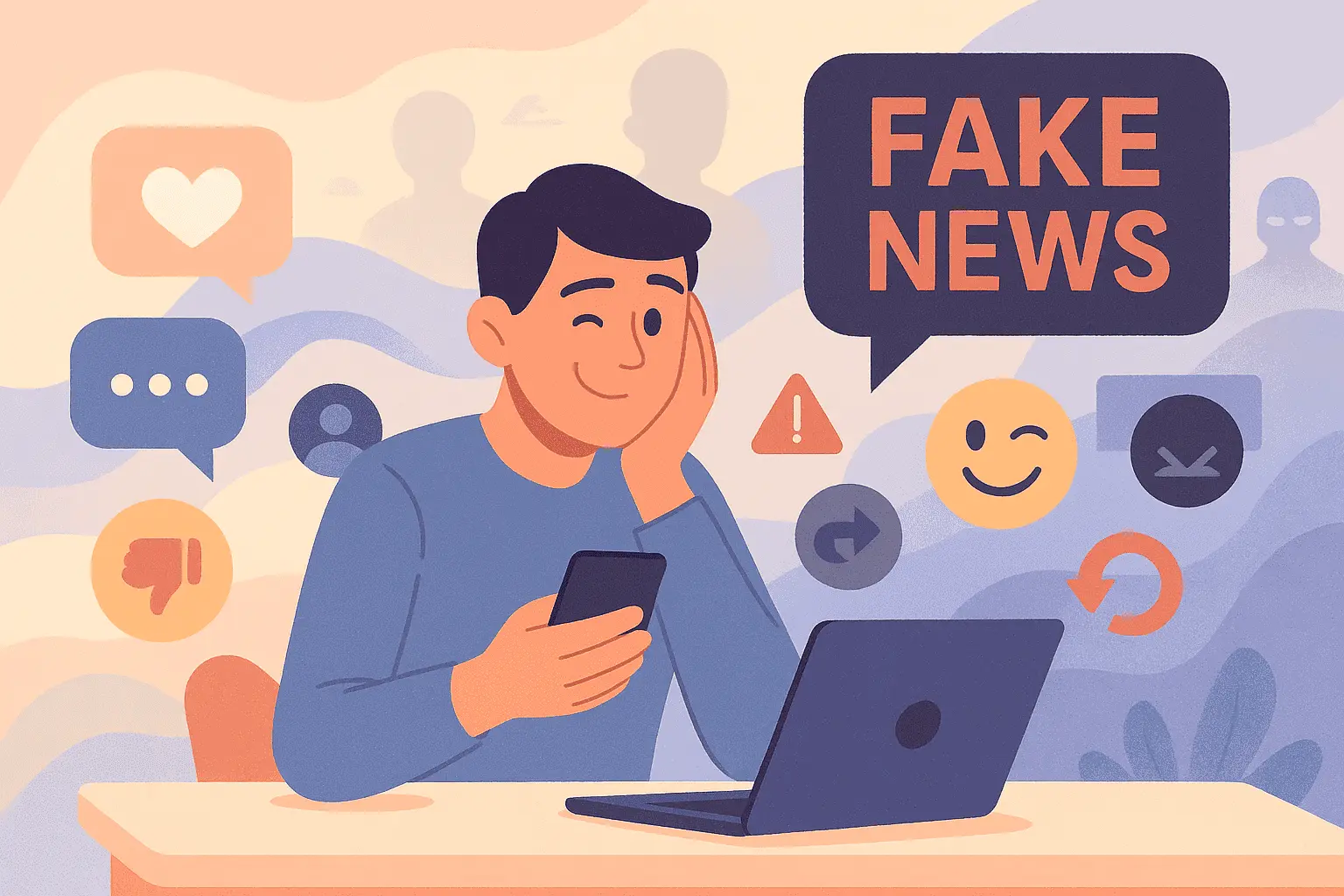
In recent years, social media has increasingly become fertile ground for online deception, especially targeting young adults. For those navigating campus life, social media fraud in US colleges is a growing epidemic. Each month brings new scam tactics that take advantage of the openness and speed of digital communication. According to the Federal Trade Commission (FTC), nearly one in four fraud victims report that the scam began on a social platform, making college student scams a multi-billion-dollar industry.
The financial toll is staggering. A report released in mid-2023 by the FTC revealed that social media-related fraud losses in the U.S. reached a record-breaking $2.7 billion. The actual figure is likely much higher, as most scams go unreported.
Social Media: The Perfect Storm for Modern Fraud
Data from the FTC consistently shows that social media is now the most profitable channel for scammers. During the first 18 months following the pandemic (January 2021 – June 2023), social platforms were the primary method of initial contact in fraud cases involving financial losses.
College students appear especially vulnerable. Among people aged 18–29 - the exact demographic of most undergrads - up to 47% of fraud victims said the scam originated on a social network. Fraudsters exploit the tight budgets of university life. The most commonly reported scams targeting college students involve fake online shopping (like heavily discounted textbooks or tech that never arrives) and fraudulent part-time job offers. This is why learning how to avoid social media scams is as crucial as passing your midterms.
Even more damaging are fraudulent investment offers, often involving cryptocurrency. These account for over half of all reported losses related to social media fraud. Victims are lured into investing in supposedly “guaranteed” opportunities, only to have the scammers vanish.
Romance scams are also on the rise. According to the FTC, nearly half of those who lost money to online romance scams said the initial contact came through social media.
How Scammers Exploit Platform Features
What gives scammers an edge on social media? It’s a combination of low-cost targeting, easy anonymity, and emotional manipulation.
Fraudsters can easily create fake identities, hijack real profiles, and reach out to friends and contacts while posing as trusted individuals. Algorithms designed to serve personalized content also allow scammers to target users based on their interests, habits, and vulnerabilities — often for free.
According to The Paypers, over 25% of Americans who lost money to scams in 2021 said the fraud was linked to social networks.
This trend isn’t exclusive to the U.S. In Australia, 96% of users reported receiving suspicious contact attempts from scammers via social media over the past five years.
The Mental Cost of Disinformation
Beyond financial loss, disinformation on social media is silently undermining mental health. A notable study from the Massachusetts Institute of Technology (MIT) found that false stories on social networks “spread significantly farther and faster than truthful ones.”
Some viral disinformation posts received 100–1000 times more retweets than fact-based content. Sensationalism spreads not because it’s accurate, but because it taps into human emotion.
This stream of emotionally charged content can have measurable psychological effects. A 2022 study published in Scientific Reports found that individuals who shared misinformation about COVID-19 had nearly double the anxiety levels of those who didn’t. The researchers suggest that exposure to unverified claims increases uncertainty, stress, and fear.
Previous research had already linked global waves of fake news – especially during the pandemic — to spikes in panic, phobias, and in some extreme cases, hospitalization due to psychological distress.
Experts have coined this effect the “infodemic”: a flood of confusing content that emotionally drains users. Studies show that this digital toxicity amplifies feelings of campus isolation and student anxiety. This is exactly why the demand for safe anonymous apps for students is rising. When traditional social media feels like a minefield of fake profiles and anxiety-inducing news, an anonymous college chat provides a pressure-free zone to seek advice and connect without risking your identity.
Disinformation also inflames social division. According to a 2020 survey by Pew Research Center, 64% of American adults believe that social media has a mostly negative impact on the country. Respondents cited the spread of false information, incitement of hatred, and cyberbullying as key concerns.
What’s Being Done to Protect Users
In response to these challenges, both governments and tech companies are rolling out new tools and initiatives.
However, technology alone isn’t enough. Experts stress the importance of digital literacy – the ability of users to critically evaluate what they see online. Here are key tips from security professionals and the FTC:
- Privacy Settings Matter – Limit who can view your posts and personal information. Avoid sharing details about your job, family, or health – this information can be used to tailor scam narratives.
- Think Before You Click – If something looks too good to be true or sparks strong emotions, take a moment. Verify the information through reliable sources. Even messages from friends may come from hacked accounts.
- Verify Identity & Practice Anonymous Chat Safety – If a ‘friend’ or a new campus acquaintance asks for money or personal info, verify the request in person. Or try this pro tip from YourSecret, a platform built on secure anonymous messaging: ask a highly specific question only the real person would know. Because traditional platforms are riddled with financial traps, many students prefer using a moderated anonymous confession board like YourSecret, where the focus is strictly on emotional support and community, not financial transactions.
- Use Two-Factor Authentication – Enable extra login protection using SMS codes or authenticator apps. Keep your apps and operating system updated. Modern antivirus tools can block phishing links and detect suspicious sites.
Social platforms are also expanding internal blacklists of known scam schemes and fake news sources. In parallel, U.S. agencies such as the FBI and FTC continue to issue scam alerts and digital safety guidelines.
A Shared Responsibility
While tech companies and regulators play a vital role, the responsibility for digital safety doesn’t stop with them. Users must remain alert, question what they see, and verify before sharing or reacting. The more informed and skeptical the audience, the harder it becomes for fraud and disinformation to take root.
In this ever-shifting information landscape, a combination of smart design, strong regulation, and media literacy is the key to long-term safety. Staying aware – even while casually scrolling – can make the difference between becoming a victim or staying protected.
References:
- Pew Research Center. Online Scams and Attacks in America Today. (July 31, 2025). https://www.pewresearch.org/internet/2025/07/31/online-scams-and-attacks-in-america-today/#:~:text=One,scams%20and%20online%20attacks%20happened
- The Paypers. Online Scams Have Become a Global Epidemic. https://thepaypers.com/fraud-and-fincrime/expert-views/online-scams-have-become-a-global-epidemic
- Federal Trade Commission (FTC). Social Media: The Golden Goose for Scammers. (October 2023). https://www.ftc.gov/news-events/data-visualizations/data-spotlight/2023/10/social-media-golden-goose-scammers#:~:text=Scammers%20are%20hiding%20in%20plain,2
- Michigan State University. First-of-its-kind MSU Study Links Problematic Social Media Use to Belief in Fake News. (May 2025). https://msutoday.msu.edu/news/2025/05/first-of-its-kind-msu-study-links-problematic-social-media-use-to-belief-in-fake-news
- Boston University, College of Communication. Leery of Government Regulation, Americans Want Social Media to Police Misinformation, Survey Finds. https://www.bu.edu/com/articles/leery-of-government-regulation-americans-want-social-media-to-police-misinformation-survey-finds/#:~:text=A%20strong%20plurality%20%2846,information%20by%20the%20platforms%20themselves
- Pew Research Center. 64% of Americans Say Social Media Have a Mostly Negative Effect on the Way Things Are Going in the U.S. Today. (October 15, 2020). https://www.pewresearch.org/short-reads/2020/10/15/64-of-americans-say-social-media-have-a-mostly-negative-effect-on-the-way-things-are-going-in-the-u-s-today/#:~:text=About%20two,neither%20positive%20nor%20negative%20effect
- Nature Scientific Reports. The Spread of Misinformation on Social Media: An Experimental Study. (2022). https://www.nature.com/articles/s41598-022-11488-y#:~:text=period,These%20findings
- Federal Trade Commission (FTC). Social Media: The Golden Goose for Scammers. (October 2023). https://www.ftc.gov/news-events/data-visualizations/data-spotlight/2023/10/social-media-golden-goose-scammers#:~:text=Scammers%20are%20hiding%20in%20plain,2
This article was written by the YourSecret editorial team based on public data and expert insights.