What to Do When a Friend Ghosts You in College
You write a third message in a row - and there is silence. You check their stories - and there is the friend group you used to be a part of. Sound familiar? If a person with whom you were thick as thieves has suddenly stopped noticing you, you should know: this happens to a huge number of students, and it is definitely not because something is wrong with you.
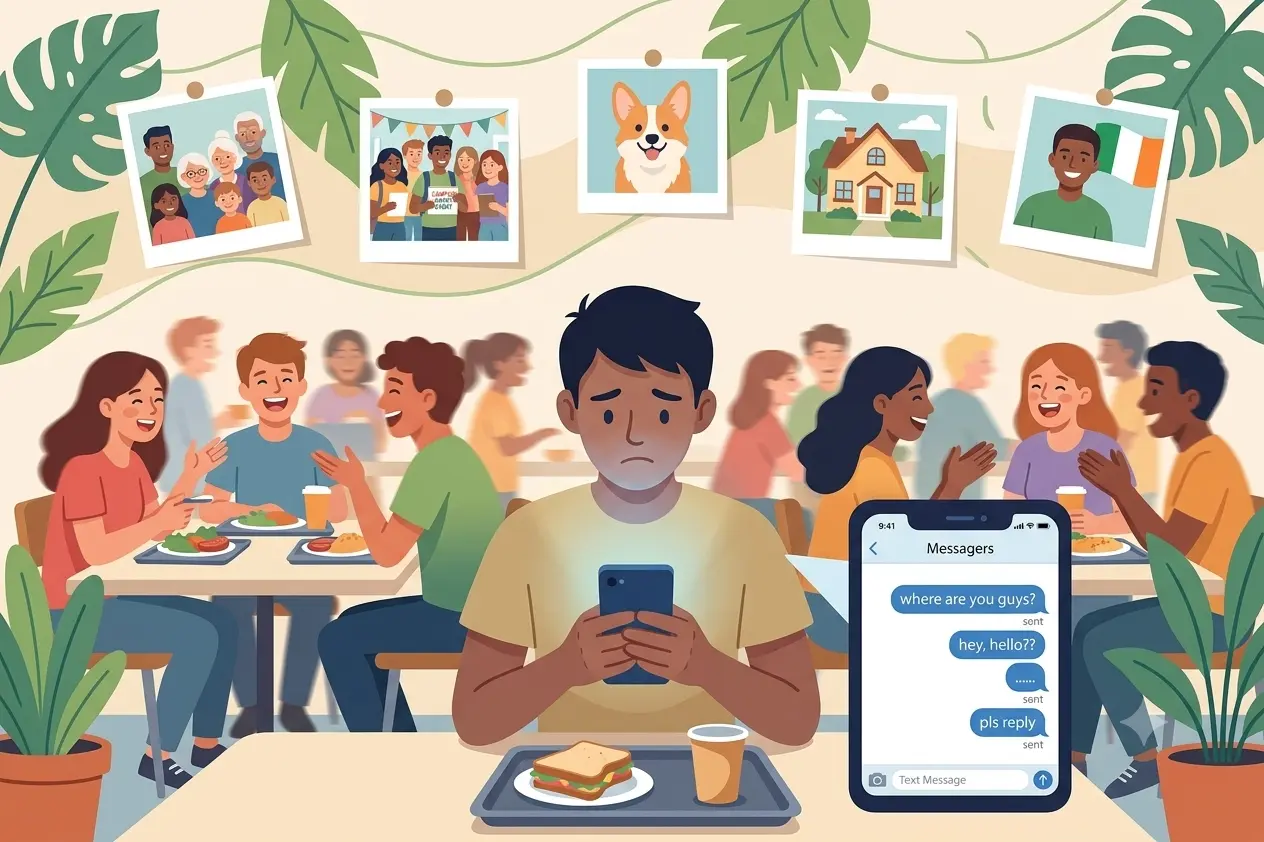
The campus is generally poorly adapted for such losses - the schedule does not change, the dining hall is the same, but your close person is no longer around. The question of what to do when a friend ghosts you arises among students more often than it seems from the outside. According to a survey by Active Minds and TimelyCare among nearly 1,100 American students, about 65% admitted that they feel lonely in college, and almost a third reported serious psychological distress. So if this has hit you right now, it is not a personal failure, but a part of a very common student experience that is simply rarely spoken about out loud.
The Silent Friendship Breakup: Why Losing Friends in College Hurts So Much
A breakup with a partner has a script: people sympathize with you, ask how you are doing, and offer ice cream. A friendship breakup does not have such a script. The status of an “ex-friend” does not exist, so people around often do not even understand that something serious has happened.
Meanwhile, studies show that the brain reacts to social rejection with the same areas as it does to physical pain - meaning the literal feeling of “I was hit” is not a metaphor. Friends are often the main support system at 18-23 years old, when family is far away and a new identity has not yet been formed. Therefore, the reality of losing friends in college hits just as hard, if not harder, than the end of a romantic relationship.
| Stage of Grief | How It Manifests in a Friendship Breakup | Healthy Actionable Strategy |
|---|---|---|
| Denial | Checking your phone constantly, assuming they just lost their phone or are extremely busy with finals. | Set a mental deadline. If they haven’t replied in three weeks, accept that the silence is an intentional choice. |
| Anger | Feeling deep resentment about the time, secrets, and emotional energy you invested in them. | Channel this energy outward. Use journaling to vent frustrations without sending an angry paragraph they will ignore. |
| Bargaining | Re-reading months of old chat history trying to pinpoint the exact joke or comment that “ruined” things. | Delete or archive the chat thread. Ruminating over the past creates false guilt for a situation you cannot control. |
| Depression | Avoiding social events on campus entirely, feeling like you will never find a true connection again. | Engage in low-stakes social environments (like a study group or a campus club) where deep emotional investment isn’t required yet. |
| Acceptance | Realizing the friendship served a beautiful purpose for a specific season of your life, but that season is over. | Focus on your newly evolved identity and remain open to new connections that align with who you are today. |
Things Left Unsaid and Feeling Left Out
The worst part is not the departure itself, but the vacuum afterward. Having no closure means that the brain plays the same question over and over again: “What did I do wrong?”. This is more exhausting than any concrete answer.
Here are a few things that really help you survive the period of uncertainty:
- Allow yourself not to know the reason. Not every friendship story gets a finale with an explanation, and that is not your fault.
- On campus, it is impossible to avoid crossing paths - in the dining hall, at a lecture, in a shared group chat. Decide in advance how you will behave: a nod, a short “hi,” and then go about your business. No scenes and no showdowns.
- Feeling left out when you see shared photos without you hurts, and that is completely normal. Give yourself the right to be sad; do not invalidate it with phrases like “come on, it is nonsense.”
- Note this: the pain of being crossed out of a friend group is not a sign that something is wrong with you. It is a sign that you know how to become attached to people.
Outgrowing Friends in Your 20s or Walking Away from Toxic Friendships
It is important to distinguish between two processes here that feel similar but require different reactions. The process of outgrowing friends in your 20s is natural: you just grew in different directions, you have new interests, a new circle, and no one is to blame. Gratitude for what was and a peaceful letting go are appropriate here.
Another thing is dealing with toxic friendships. If a person constantly invalidates you, compares you with others, or disappears only when you become “inconvenient,” their departure is not a loss but a liberation. Red flags were usually visible in advance: manipulation, the silent treatment as a punishment, and a friendship that is only “on the rise” when they need something from you. If you recognize yourself in this description, do not try to bring such a person back. Muting them, creating distance, and focusing on yourself is self-care, not drama.
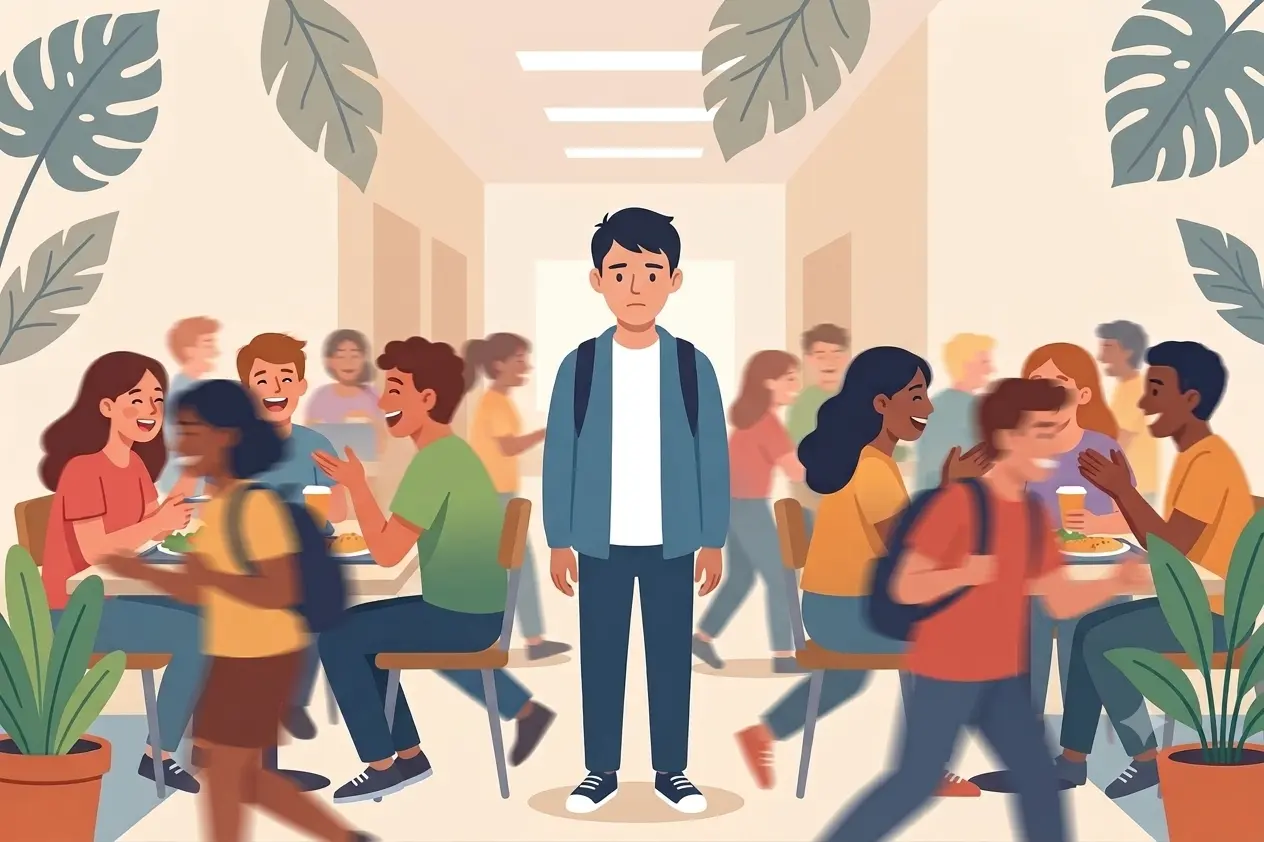
A test question that helps to quickly distinguish one from the other: did it become easier or harder for you after communicating with this person in the last months before the breakup? If it is easier, it is most likely a natural outgrowing, which you can be sad about without anger. If it is harder, more anxiety-inducing, and you constantly analyze your words, it was probably a toxic dynamic, and your body simply got tired of enduring it.
How to Survive a Friendship Breakup if Friends Ignoring Me Causes Anxiety
There is no universal recipe for how to get over a friendship breakup - everyone has a different pace of recovery. But there are a few things that speed up the process rather than just “eating up” time.
When the realization hits that a friend ghosted me, the first reaction is to text them again. And again. This makes sense: the brain seeks closure through contact. But it is exactly these repeated attempts that most often prolong the pain. If the feeling of friends ignoring me is triggering your anxiety, here is what really works:
- Do not be the second one to text. One message asking “is everything okay?” is fine. Five messages in a row is no longer about clearing things up, but about an attempt to control someone else’s silence, which you cannot control.
- Temporarily hide their content on social networks. It is not necessary to unfriend them forever - just remove the person from your feed for a month or two until the acute phase passes. Fewer triggers mean fewer reasons to wind yourself up.
- If social anxiety flares up when you cross paths on campus, plan your route in advance to minimize accidental encounters in the first few weeks. This is not cowardice, but reasonable care for your nervous system while the wound is fresh. As soon as the emotions settle down a bit, the encounters will become easier to tolerate on their own.
Fun Fact A study published in the PNAS journal showed that when a person experiences severe social rejection, the same areas of the brain (the somatosensory cortex and the posterior insula) are activated as with physical pain - to the point that a common painkiller slightly reduces the intensity of the feeling of rejection. The brain literally does not distinguish between a broken heart and a bruised knee.
Overcoming Loneliness in College: Where to Turn if a Friend Ghosted You
Keeping resentment inside is destructive - it does not go anywhere, it just accumulates and then surfaces in other relationships. Being lonely in college is a state that about half of US students go through, judging by recent surveys, so if it is empty and quiet right now, you are in a very large company of people who simply had no one to talk to about it.
College loneliness is rarely about the complete absence of people around you - the campus is usually noisy and crowded. It is about something else: about the feeling that there is no one around with whom you can be truly honest, without masks and without the fear that your words will spread across the group chat.
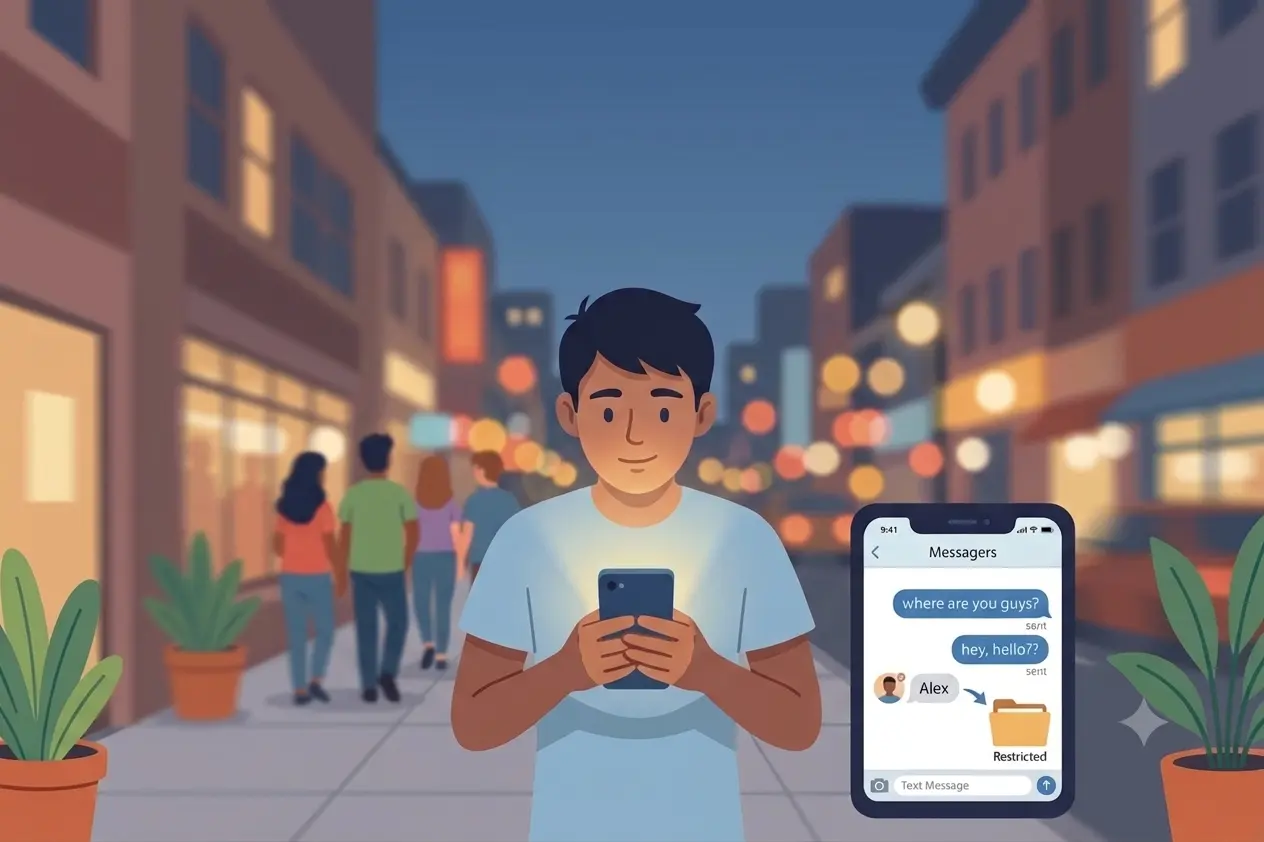
Sometimes after a close person leaves, you want to talk to someone who does not know your entire shared history and will not accidentally blab to mutual acquaintances. This is where yoursecret can come in handy - an app from Farnora Limited, built on the idea of Match by Mindset: Thoughts. Moods. Interests. Not profiles. Instead of profiles with photos and a number of followers, there are anonymous 1-on-1 chats where the AI system Brain selects a conversational partner based on mood and interests, rather than appearance. There are no public photos, no followers, and the messages themselves disappear after 24 hours - you can honestly talk about the ghosting without fear that someone from your mutual acquaintances will see it. To try it, you can download the app and chat tonight if you do not want to be left alone with these thoughts.
FAQ
A friend is ghosting me - should I text them again?
One calm message asking if everything is alright is fine. If there is no answer for several weeks, further attempts usually only increase anxiety and do not bring an answer any closer.
How can you tell if a friendship is toxic and has not just faded away?
A toxic friendship is usually accompanied by manipulation, invalidation, or the silent treatment long before the final breakup. A natural fading away more often happens without drama - there are simply fewer shared topics and less time spent together.
Why is losing a friend sometimes more painful than breaking up with a partner?
Partly because there are no support rituals around you, like during a romantic breakup, and a person copes alone. The brain also reacts to rejection with similar mechanisms as it does to physical pain.
What should you do if you have to see an ex-friend every day in class?
Think of a neutral reaction in advance - a short nod or a “hi” without extra words. Over time, the sharpness of the encounters noticeably decreases.
Is it normal to be sad about the loss of a friendship for months?
Yes, it is absolutely normal, especially if the friendship was long and close. There is no right timeline for grieving relationships, even non-romantic ones.
How do you cope with loneliness if you have no one to share this story with?
You can talk to a campus counselor, a new acquaintance, or anonymously - for example, in apps like yoursecret, where you do not need to explain the whole backstory of the relationship.
A friendship that ended without explanation is not a life sentence for your ability to make friends in the future. It is just one closed chapter out of many that are still ahead.