Why Quick Chats With Strangers Brighten Your Entire Day
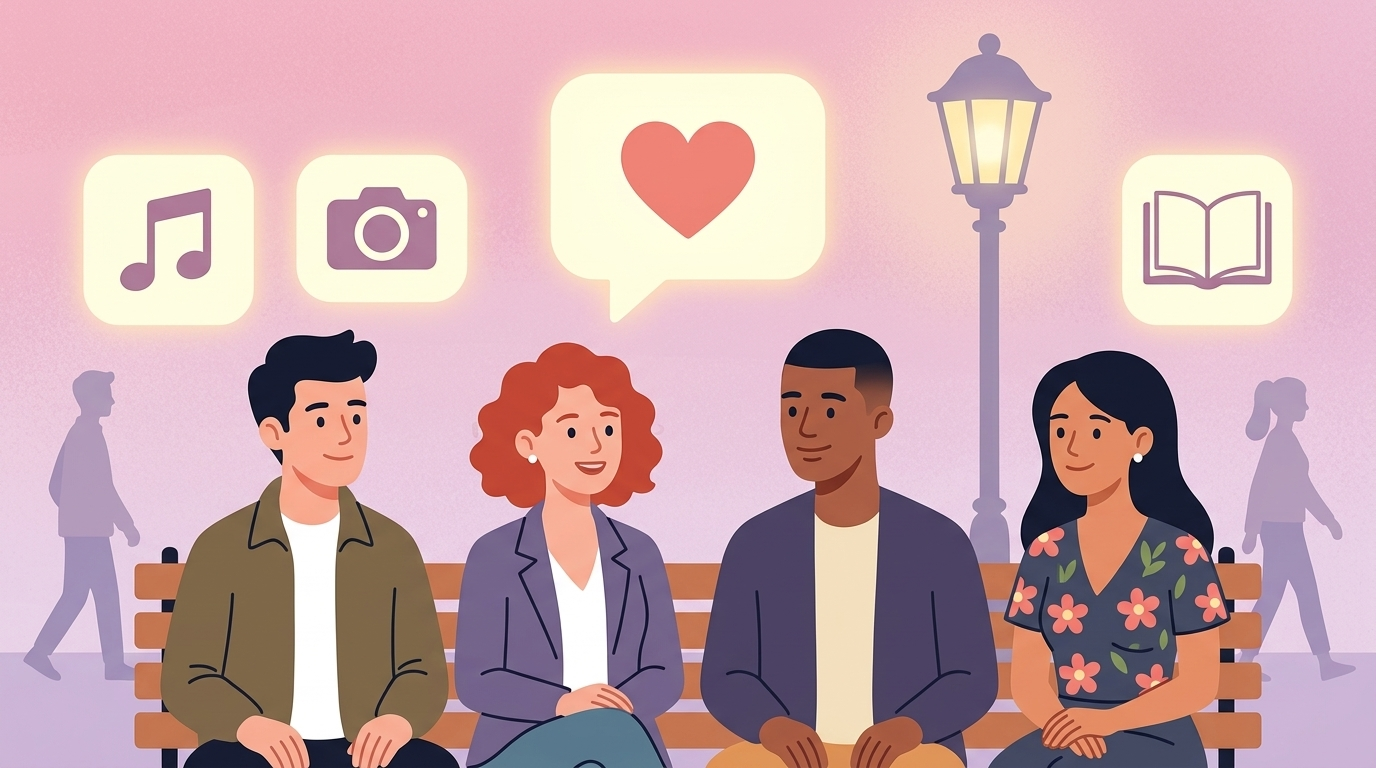
Your social battery has a glitch nobody warns you about. Deep conversation with the people who matter most - the ones that demand memory, context, emotional labor - can drain you dry, even when you love them fiercely. A thirty-second exchange with someone you’ll never see again does the opposite. It costs almost nothing and somehow leaves you lighter. That’s not a contradiction. It’s a clue about what the importance of social connection actually looks like once you strip away the obligation.
Close relationships ask you to carry history. A stranger asks nothing - no inside jokes to track, no fear of saying the wrong thing to someone who’ll remember it in six months. That freedom is exactly why low-stakes contact can feel like oxygen on a heavy day.
- I’m a researcher who spends most of my working life staring at the gap between how people predict a conversation will go and how it actually goes. That gap is where unnecessary loneliness lives - and where quietly good days get thrown away before they even start.
I study micro-interactions and social anxiety in young adults - the small, easy-to-dismiss moments that quietly shape how connected or isolated someone feels day to day.
The people we dismiss as irrelevant - the barista, the guy in the elevator, the woman waiting for the same bus - are doing more for our mental health than we credit them for. This isn’t a fringe theory. It’s backed by decades of sociology and a growing pile of behavioral experiments.
The Real Science Behind the Strength of Weak Ties
In 1973, sociologist Mark Granovetter noticed something odd while studying how people find jobs. It wasn’t close friends and family who opened doors most often - it was acquaintances, casual coworkers, old classmates barely worth calling friends. His original research reshaped how sociologists think about networks entirely.
Why would a loose connection outperform a close one? Your inner circle already knows what you know - same headlines, same opinions, same circles. A weak tie is a bridge to a different pocket of information and opportunity you’d never stumble onto otherwise.
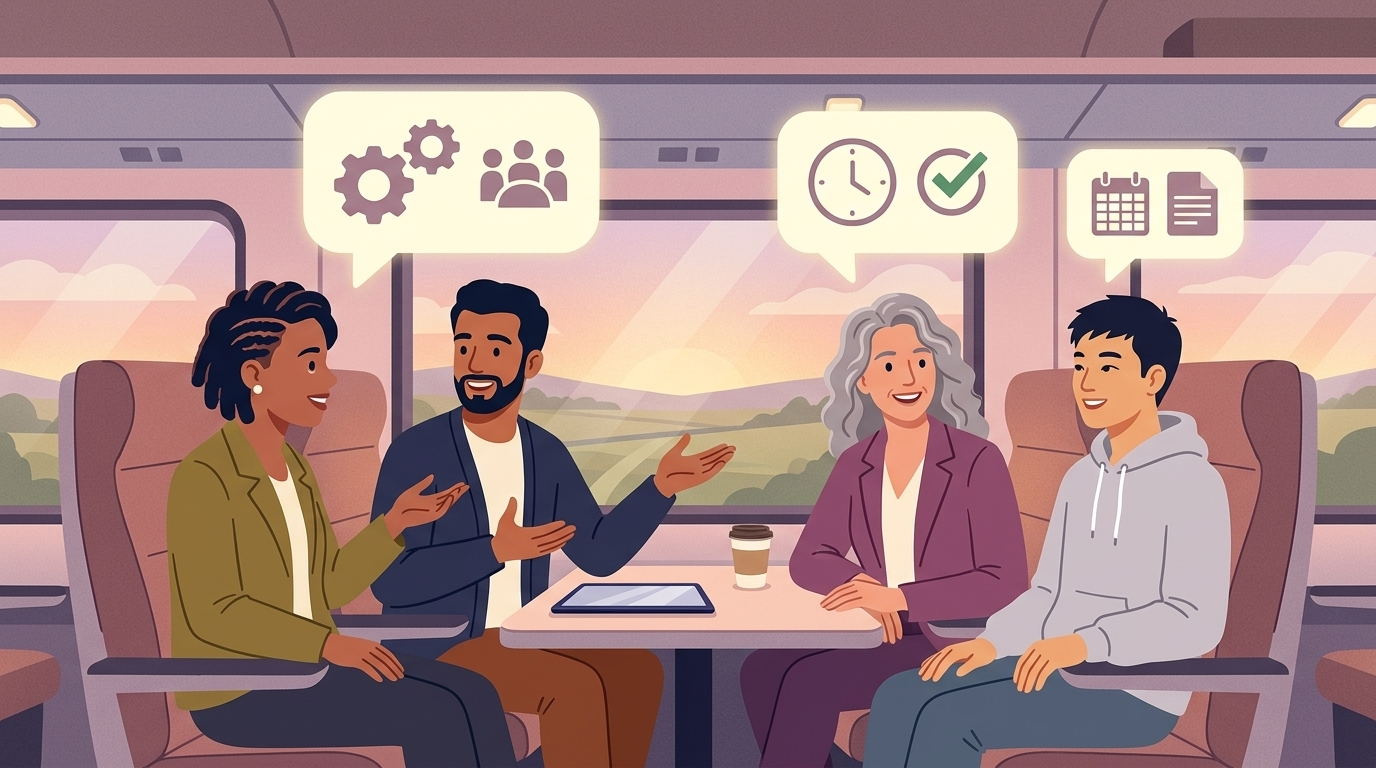
Decades later, researchers at the University of Chicago tested something adjacent: not what these connections do for your career, but what they do for your mood in the moment. Nicholas Epley and Juliana Schroeder had commuters either talk to a stranger on the train, sit in silence, or do whatever they’d normally do. Every group predicted the conversation condition would be the worst one. They were wrong on every count. The talkers reported the happiest rides , the silent group reported the least pleasant ones, and not one person who attempted a conversation got ignored.
That mismatch has a name in psychology: a forecasting error. We assume strangers are closed off. In practice, most people are quietly starving for the same low-stakes contact we’re too anxious to offer them.
Surprising Mental Health Benefits of Daily Small Talk
There’s a physiological story under all this. A short, pleasant exchange with someone you don’t know triggers a measurable dip in cortisol, the stress hormone. Your nervous system reads brief friendly contact as a signal that your environment is safe, and it relaxes accordingly.
Even a thirty-second interaction can nudge your brain toward releasing small amounts of oxytocin, the bonding chemical. Eye contact, a shared laugh, a genuine “how’s your day going” can register as connection neurochemically, no heart-to-heart required.
There’s also an interruption effect. Anxious thoughts thrive on repetition - the same worry looping without resolution, what researchers call rumination. A conversation, even a forgettable one, forces attention outward and breaks the loop. This is one of the underrated benefits of small talk: it’s not filler, it’s a reset button.
Rediscovering the True Power of Human Connection
Here’s a strange but common admission: plenty of people find it easier to say something honest to a stranger than to their own family. Ask a therapist, a bartender, or anyone with a long-flight seatmate who opened up unprompted. There’s a name for this - the “stranger on a train” effect - and it isn’t about strangers being better listeners. It’s about what’s missing.
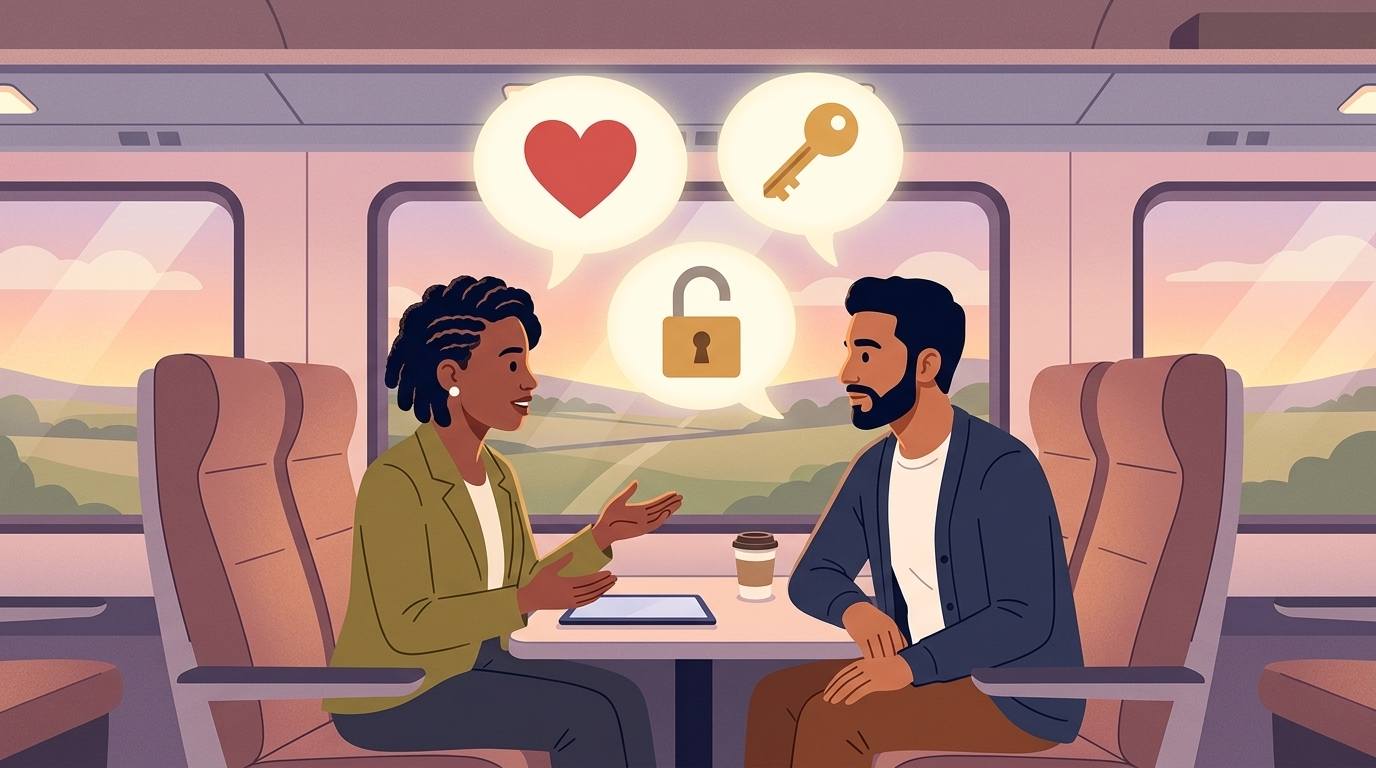
With people who know you well, every word gets filed against a history. Say something out of character and you risk a raised eyebrow, a follow-up question, a version of yourself you’ll have to explain later. A stranger has no such archive. There’s no reputation at stake, no fear it becomes a running joke at the next family dinner. Paradoxically, the total absence of a relationship is what makes total honesty feel safe - the quieter, more disposable half of connection, and still meaningful.
Practical Ways on How to Talk to Strangers With Ease
If the idea of walking up to someone makes your stomach drop, you’re in good company - the study above showed almost everyone overestimates how awkward it’ll be. A few low-pressure habits make it easier, and none require charisma.
Comment on the shared moment, not the person. Complimenting appearance can land as intrusive; noting the absurdly slow elevator or the weather you’re both standing in rarely does. Ask something open, but low-stakes. “What are you reading?” invites a real answer without demanding vulnerability. Let silence be an acceptable outcome. Some people won’t engage, and that’s not proof you did anything wrong. Getting comfortable with a shrug means lowering your own threshold for trying next time, which is really the whole skill.
Finding a Safe Chat With Strangers in the Digital World
The train-stranger effect doesn’t stay on trains. The same appetite for low-stakes, judgment-free contact exists online - arguably more, since digital life has become performance instead of conversation. Most platforms reward the curated version of you: the best angle, the funniest caption. That’s exhausting, and it isn’t the same as actual contact.
This is where yoursecret fills a gap curated feeds can’t. Instead of another feed to manage, it’s built around anonymous, low-pressure conversation - the digital equivalent of the seat next to a stranger on the train, minus profile pictures, follower counts, and the pressure to perform.
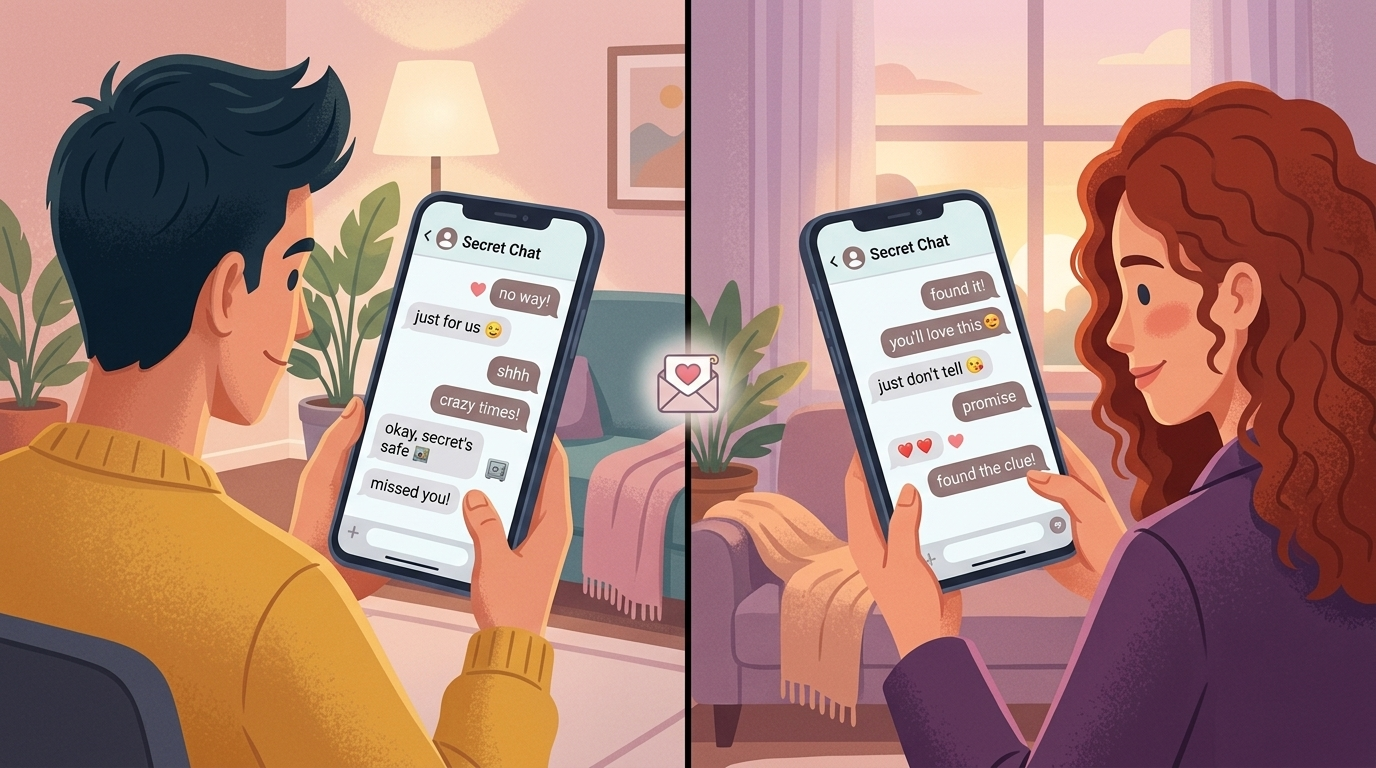
That anonymity does real psychological work. Without a name or face attached, people tend to open up faster and judge each other less, mirroring exactly what made the original stranger-on-a-train effect work. It removes the two things that usually block honesty: reputation risk and social debt. Nobody’s keeping score.
Whether it’s a two-minute vent about a bad day or a longer chat with someone else awake at 3 a.m., this kind of talk to strangers online scratches an itch scrolling never quite reaches. If that sounds worth trying tonight, you can download an app and see what a low-stakes conversation with a real, anonymous person feels like.
- Fun fact: in Epley and Schroeder’s commuter study, the mood boost held regardless of personality type - introverts reported the same lift from talking to a stranger as self-described extroverts. The benefit wasn’t about being naturally chatty. It was just about trying.
Frequently Asked Questions
Is it normal to feel anxious before talking to a stranger?
Completely. Most people rate the anticipated awkwardness of starting a conversation far higher than what they actually experience once they try. The nerves are a prediction, not a preview.
What if the other person doesn’t want to talk?
That happens sometimes, and it says nothing about you. A short opener costs almost nothing to offer, and the research above found close to zero outright rejections.
Why can talking to random people online feel easier than in person?
Anonymity removes reputational risk. There’s no shared social circle to worry about and no lasting record tied to your real identity, which frees people to be more candid than they’d be face-to-face.
How is small talk different from deep conversation, energy-wise?
Deep conversation requires memory, history, and vulnerability with consequences. Small talk asks for almost none of that, which is the whole importance of small talk: it recharges instead of draining you.
Can casual conversations with strangers improve my mood long-term?
One conversation won’t rewire your life, but the mood boost is real and repeatable. Treat it as a small daily habit rather than a one-time fix, and the effect compounds.
Is connecting with strangers on an anonymous platform actually private?
The design centers on anonymity rather than curated profiles or public follower counts, which is precisely what removes the social pressure that makes people perform instead of connect honestly.