Why You Confide in AI Instead of Real Friends
3 a.m. Your phone sits at 11%, your roommate’s asleep, and you’re typing the thing you’ve never said out loud. Send. The reply comes back gentle, fast, a little too perfect. You exhale. Ninety seconds of relief, maybe two. Then you shut the tab and the room gets quieter than it was before you started. You tell yourself you’ll text an actual human tomorrow. You won’t, not really.
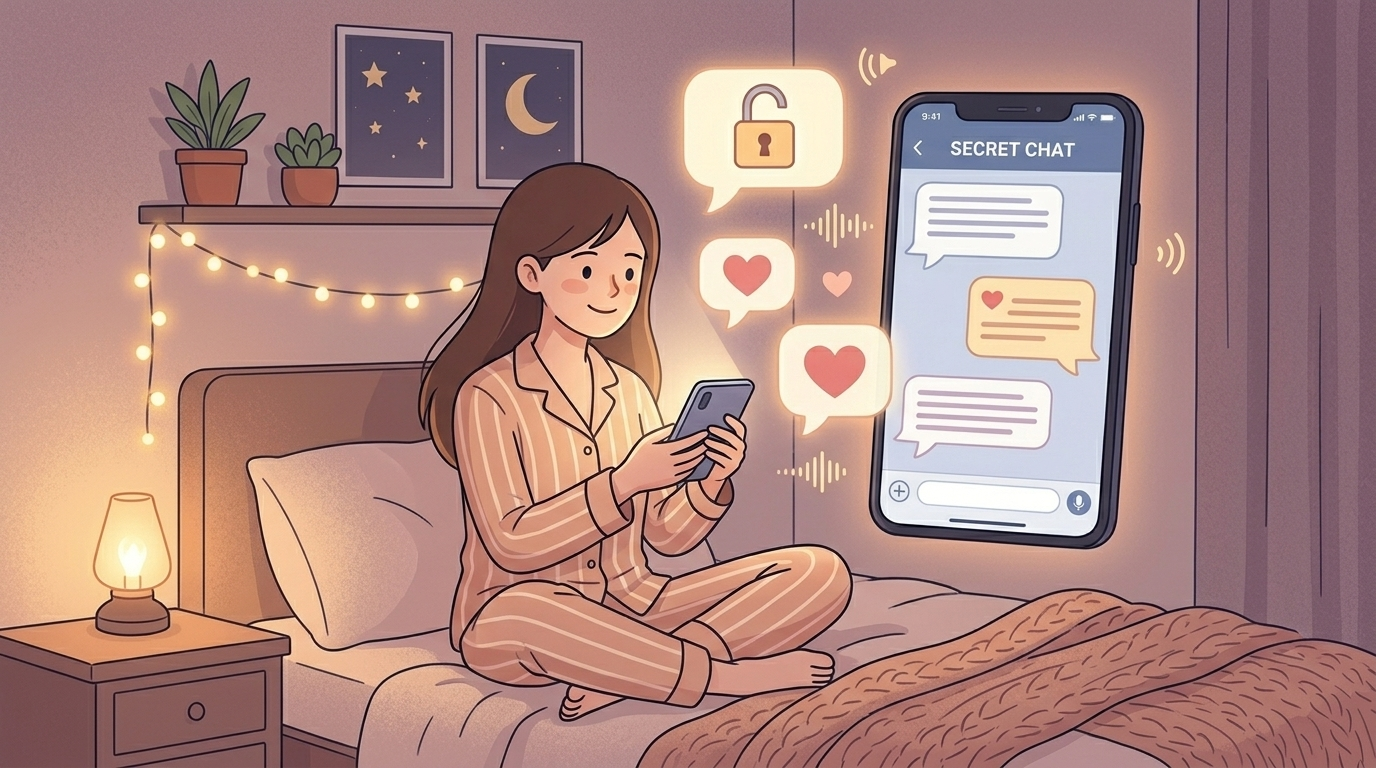
Plenty of us live this loop now. Not because we hate people (most of us don’t) but because people carry risk and a chat box doesn’t. So let’s look at why the swap feels so easy, what it quietly takes from you, and where something kinder might exist.
About the author: I’m a cyberpsychology researcher. I study youth social dynamics, mainly digital loneliness and how Gen Z handles being vulnerable. I’ve spent years hearing people describe the ache of standing in a crowd and still feeling unseen.
The Hidden Appeal of Using AI as a Therapist
Nobody wakes up and decides to trade their friends for software. It creeps in. Your best friend is buried in finals, your roommate would judge, and the group chat only has room for memes and screenshots of other people’s perfect lives. So you open a blank window instead.
I’ve collected a lot of these stories. One student told me she was using chatgpt as a therapist the night before every exam, because it never sighed at her and never said “we’ve covered this already.” A guy I interviewed admitted venting to chatgpt from a bathroom stall at work, thumbs shaking, then wiping the whole thread before his break ended.
Why does it work? No face to read. No pause while someone weighs how much they care. You get a tidy, kind answer in seconds and you never babysit another person’s reaction, which feels like heaven if you grew up performing for public feeds. A locked diary that talks back. It’s free, too, and it never asks for a favor in return. No guilt about hogging the airtime, no rain check you owe anyone.
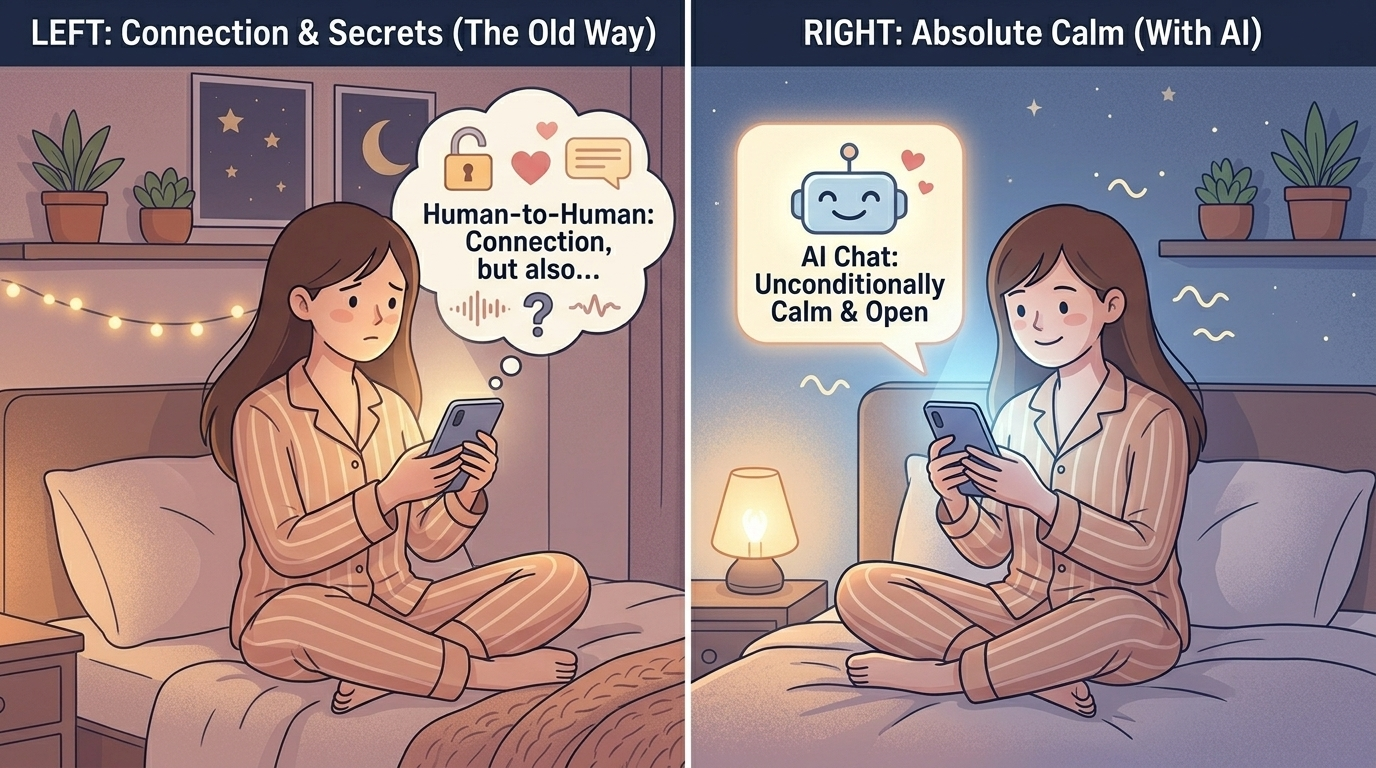
There’s a quieter reason, too. Human conversations stick. A friend might bring it up at dinner, or look at you differently on Thursday, or send follow-up texts out of pure love that still land like pressure. A chat window forgets you the second it closes. For plenty of people, that forgetting is the whole product.
How the Illusion of Empathy in AI Captures Our Trust
None of this is new. Back in 1966, Joseph Weizenbaum built ELIZA, a program that mostly flipped your sentences into questions, and users still treated it like a real listener . It rattled him. A few lines of pattern matching, and people poured their hearts out.
Today’s models are far smoother, yet the mechanism hasn’t budged. The words come out warm and balanced, so your brain files them under “someone cares.” Nobody’s home, though. The thing doesn’t lie awake wondering how your Tuesday went, and when you stop typing, the silence on its side is total. That’s the cruel part: warmth you didn’t earn and can’t repay feels like a gift, yet nobody is actually handing it to you.
That gap is easy to miss when you’re wrecked, scrolling past midnight with an unsent text to a friend rotting in your drafts. People tell me chatgpt as therapy feels real because it mirrors them with such precision, and mirroring feels like being seen. An evening spent talking to chatgpt when lonely can pass for company right up until the tab closes and the dead quiet rushes back in.
The Emotional Trap of Parasocial Bonding With Code
Here’s where it gets sticky. Repeat the late-night ritual for a few weeks and something shifts. You start saving thoughts for the bot. You feel a pinch of guilt when you skip a night, like ducking a call from someone who’ll never notice. That’s emotional attachment to ai, and it grows quietly because the relationship asks nothing back. Here’s the tell: you open the app before you check on a friend.
Psychologists call one-sided bonds parasocial. The term started with fans and TV hosts, but a parasocial relationship with ai adds a twist: the other side answers, so the bond feels mutual even though only one of you is invested. Research on parasocial ties and loneliness keeps pointing the same way. One-way closeness soothes you in the moment and leaves the real hunger untouched.
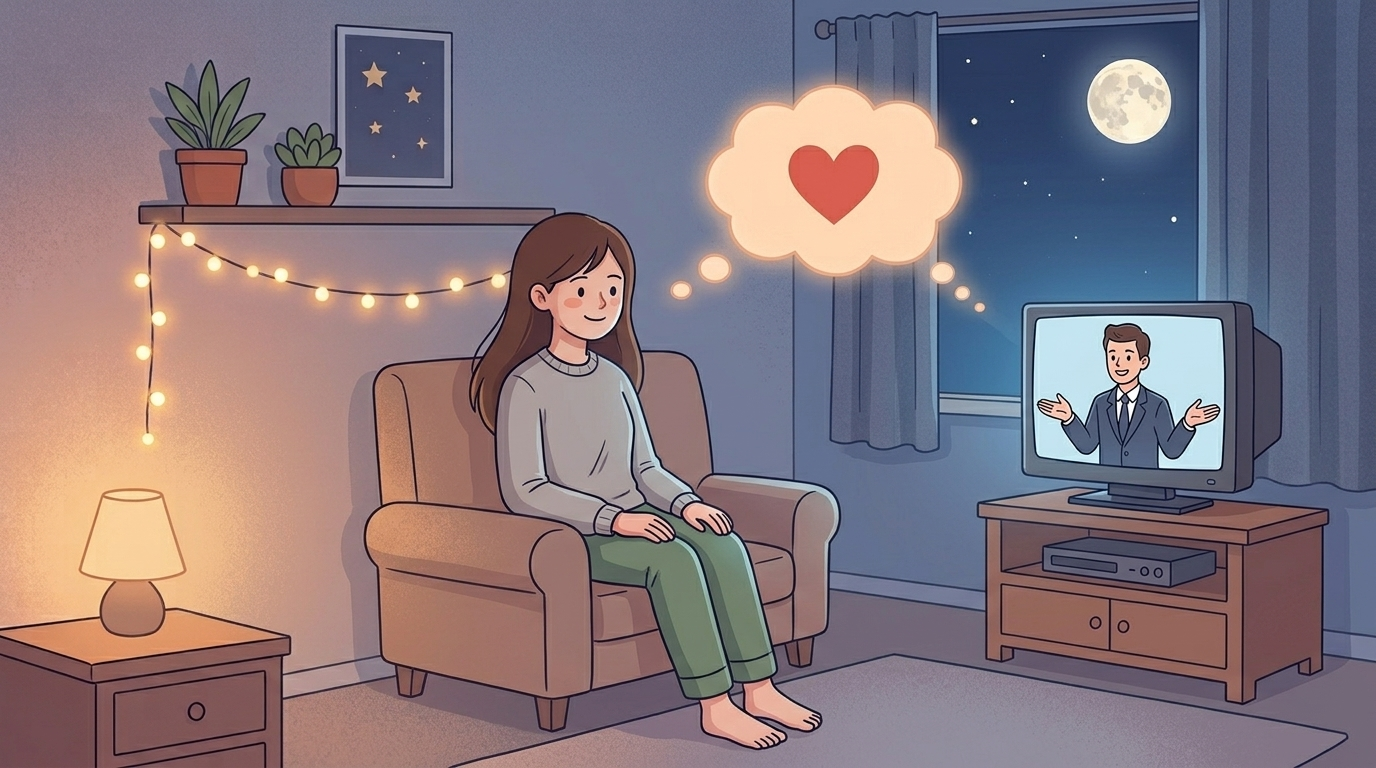
I’m not here to shame anyone. I get why people grab ai for loneliness; it’s always on, it’s gentle, it never leaves you on read. But comfort with zero risk means growth with zero risk. Real friendship comes with awkward silences, clumsy advice, the occasional “that stung.” Those moments build the muscle. Skip them long enough and it wastes. One young man told me he hadn’t returned a call in months, yet he’d typed hundreds of pages to a bot. Coffee with an actual friend had started to feel like a high-wire act. The screen looked safer every week.
Is It Bad to Vent to AI When You Need Real Support
Short answer, no. Venting helps, and typing it out sometimes works as a warm-up for saying it aloud. People ask me this constantly. The habit isn’t the issue. The replacement is.
Trouble starts when the bot becomes the only place anything gets said. It can help you untangle a thought, sure. But can chatgpt replace a therapist who tracks your patterns across months, spots real danger, and carries clinical training? No. Leaning on chatgpt for emotional support alone can leave you feeling heard but never held.
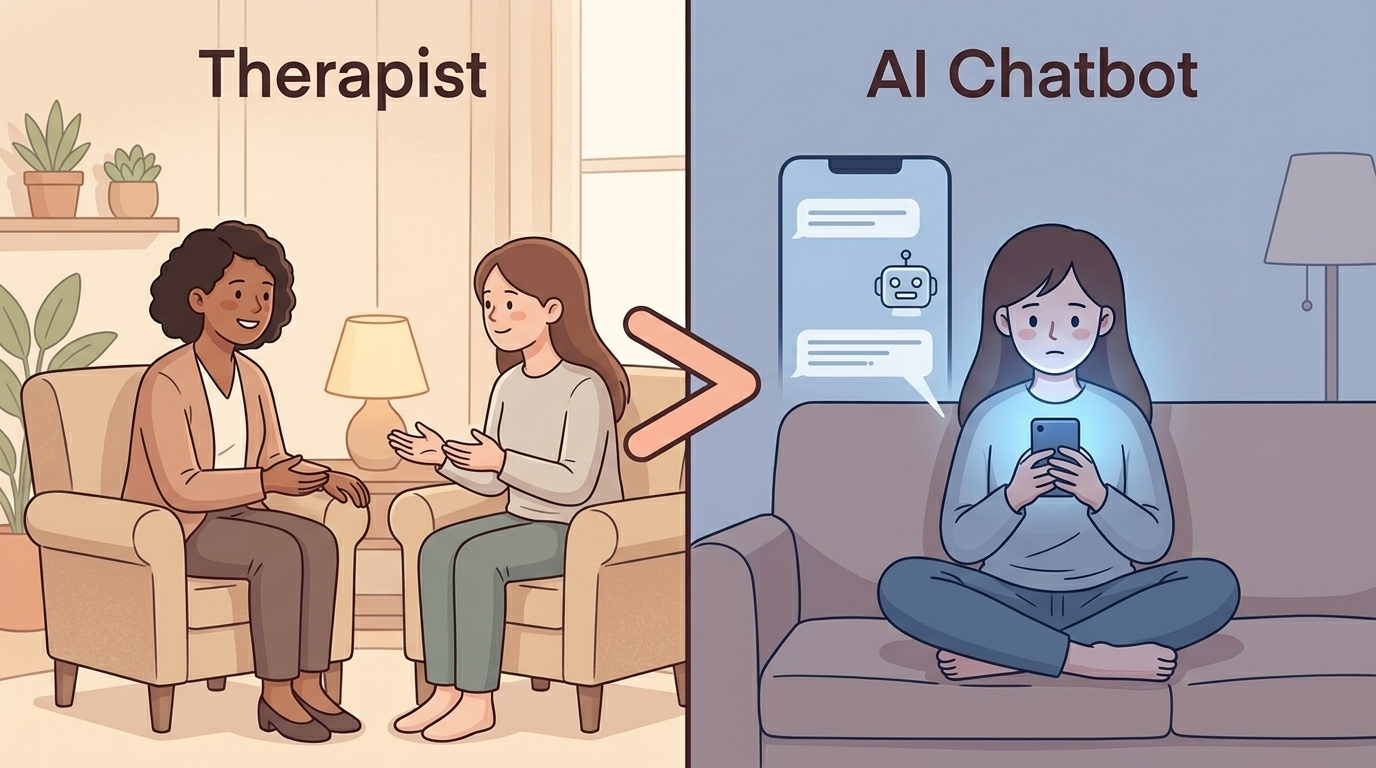
A therapist is a trained human with a license and an ethical code, someone who can say, gently, “let’s stay with that for a minute.” A bot is tuned to keep the chat pleasant. Different jobs entirely.
Try a rough test. After a session, do you feel readier to reach out, or less? If the screen keeps shrinking your world, that’s your answer. If it nudges you toward people, it’s doing some small good. And if you keep drafting messages to a friend inside the chat but never send them, notice that too.
Moving Beyond Chatbots to Judgment Free Human Spaces
Years of curated feeds and carefully timed replies have worn most of us out. What we want is a person without the price of being known. Safety, not code. That’s a fair thing to want, and it exists. Think about the last time you told a stranger on a train something true. Strange how light that felt. The trick is finding anonymous emotional support where a real human answers, plus anonymous venting online that won’t turn your worst night into a profile.
About us. People don’t need cold code; they need safety. Yoursecret pairs the zero-risk privacy of anonymity with the warmth of a real listener. No profiles to polish, no likes to chase, no audience, no screenshot to fear. Real people, real replies, zero audience. Nobody sees who you are, yet someone still hears what you said. One person talks, another answers, and the app closes without a trace. A porch light at midnight, not a stage.
Fun Fact: In 1966, ELIZA’s creator Joseph Weizenbaum watched his own secretary ask him to leave the room so she could talk to the program alone, sincerely trusting a few lines of code with personal secrets, as if it were a confidant.
Frequently Asked Questions
Is it normal to feel more comfortable talking to AI than to my friends?
Yes. A bot has no reactions to manage, so it feels low-stakes. That’s common, not shameful. Just watch whether it’s becoming your only outlet.
Can confiding in an AI make my social anxiety worse in the long run?
It can. Dodging people feels like relief tonight, but it cuts your practice time, and real conversations start to feel scarier.
Why does talking to ChatGPT feel like actual therapy sometimes?
It reflects your words back with warmth and zero judgment, which looks a lot like good listening. What it lacks is memory of you and any real accountability.
What should I do if I realize I am emotionally dependent on a bot?
Don’t panic, and don’t quit cold overnight. Cap the late-night sessions, then tell one trusted person or a professional what’s going on.
How can I transition from chatting with AI back to real human conversations?
Start small. After you write a thought to the bot, share one line of it with a person. Low-pressure, anonymous spaces make a decent bridge.
How does anonymous human connection differ from talking to an algorithm?
A human can be surprised, moved, even changed by you. An algorithm predicts the next sentence. Only one of them can actually care.
You don’t have to quit the late-night chats cold turkey, and you shouldn’t feel guilty for having them. Let them be a doorway, not a room. Say the thing to the screen, then say a smaller version to a human. One sentence works. So does a voice note you almost delete. If you want a gentler place to start, download app and talk to someone real, no name attached.