The Loneliness Paradox: Why So Many Americans Feel Isolated in the Age of Connection
The Loneliness Paradox: Why So Many Americans Feel Isolated in the Age of Connection
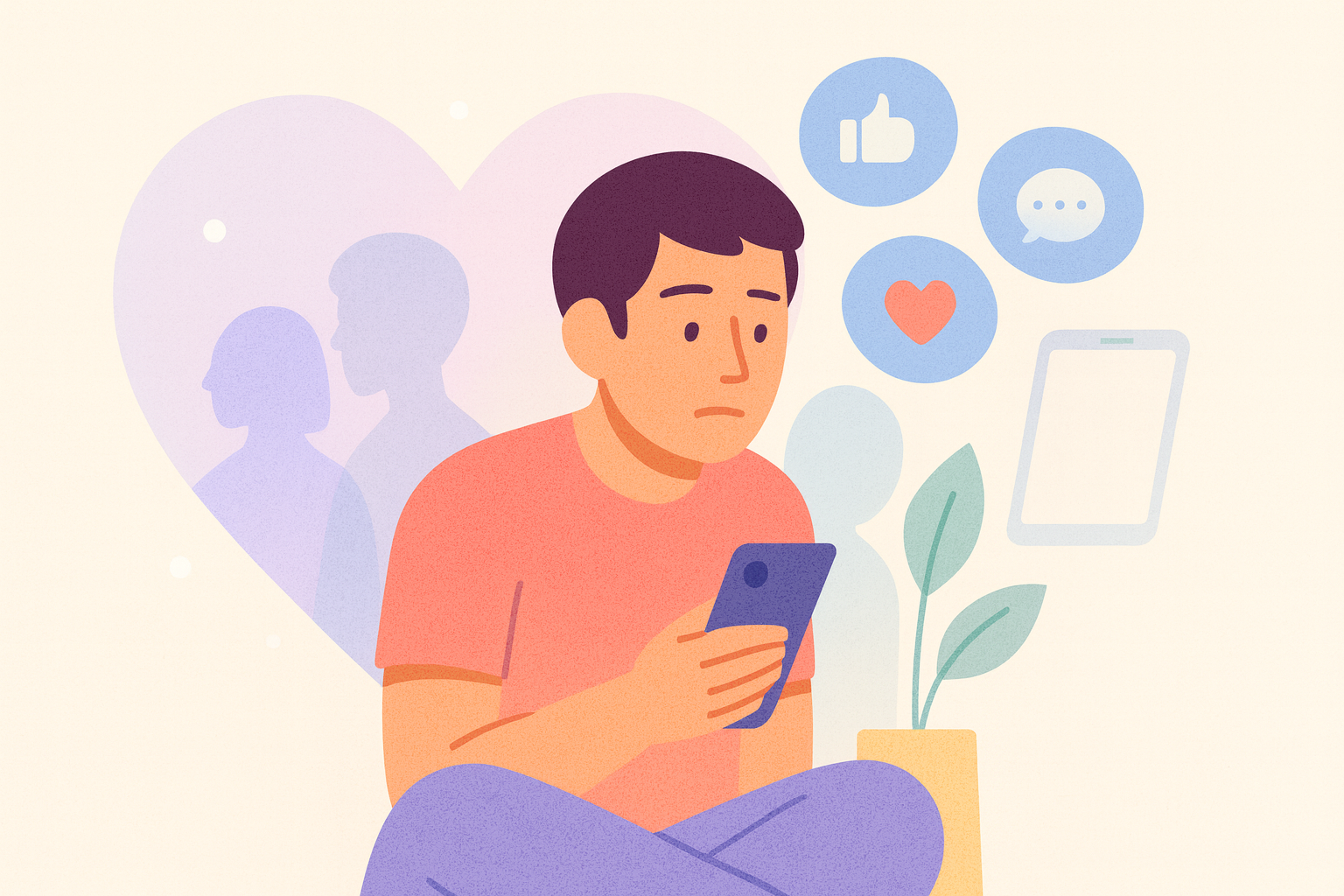
In today’s world, Americans have never been more digitally connected – yet millions feel increasingly alone. Social media, smartphones, and instant messaging connect us in seconds, but they haven’t cured what U.S. Surgeon General Vivek Murthy declared in 2023 as an “epidemic of loneliness.” In fact, these very tools may be amplifying the issue. This paradox, where constant digital communication coincides with widespread emotional isolation, is now one of America’s most urgent public health crises.
The Numbers Behind the Loneliness Epidemic
According to a 2024 Pew Research survey, about one in six Americans feel lonely or isolated “all or most of the time,” while 38% say they feel lonely "sometimes." Only 47% report that they “hardly ever” experience loneliness. Notably, this epidemic affects all demographics – but younger and middle-aged adults appear most affected.
A Harvard study found that Americans aged 30–44 reported the highest loneliness levels, with 29% frequently or always feeling lonely. That’s higher than among younger adults (18–29), where 24% report the same. Surprisingly, only 10% of seniors (65+) identify as frequently lonely. This challenges the stereotype that loneliness is primarily an elderly issue.
Single individuals are also more likely to feel lonely than their married counterparts, with 39% of single adults reporting weekly loneliness versus just 22% of married adults. Lower-income individuals are also more affected, often due to fewer resources for social activities and greater life stress.
The Real-World Toll of Loneliness
Beyond emotional pain, loneliness has measurable physical and mental health consequences. Persistent isolation raises the risk of heart disease, depression, anxiety, cognitive decline, and even premature death. The risk level is comparable to smoking 15 cigarettes per day or living with obesity.
A staggering 81% of adults who described themselves as lonely also reported symptoms of anxiety or depression, compared to only 29% of those who did not feel lonely. For older adults, the social cost is immense: loneliness leads to an additional $6.7 billion in Medicare costs annually, largely due to higher rates of illness and nursing facility care.
Mental health professionals describe a feedback loop – loneliness exacerbates depression and anxiety, which then encourage further social withdrawal. The result? A silent epidemic behind closed doors and glowing screens.
What’s Driving the Disconnect?
The causes of modern loneliness are complex and deeply intertwined with American culture, economy, and technology. Over the past two decades, in-person socializing has sharply declined. Between 2003 and 2023, Americans spent 20% less time interacting with friends face-to-face. For young adults and unmarried men, the drop was over 35%.
Work is a major barrier. A 2024 Harvard survey revealed that 62% of Americans blame being "too busy or tired" from work for their loneliness. The rise of the gig economy, long hours, and side hustles has left many Americans without time or energy for social life.
Economics also plays a role. Lower-income Americans are more likely to feel isolated, often because of limited access to communal spaces, transportation, or paid events.
Cultural trends compound the issue. American values have leaned toward individualism and self-reliance for decades. While independence is often seen as strength, it can isolate individuals who are hesitant to ask for support or admit they feel lonely.
Meanwhile, religious and civic institutions that once provided social connection are in decline. Fewer people attend church or participate in local organizations, leaving many without consistent communal touchpoints.
Technology: The Double-Edged Sword
Technology’s role in loneliness is deeply paradoxical. On one hand, it allows people to stay in touch with friends and family across long distances. On the other, it replaces meaningful face-to-face interaction with brief, often superficial, digital exchanges.
In a national survey, 73% of Americans said that technology contributes to loneliness. Hours spent scrolling social media are hours not spent in real-life conversation. Social media often presents highlight reels of others’ lives, causing viewers to feel inadequate or excluded.
While some users report positive experiences with online relationships, others find them shallow. In a 2024 poll, 50% of Americans said their digital connections felt "superficial." Just 3% cited online communities as their primary source of belonging.
The pandemic worsened the problem. Lockdowns normalized digital communication and remote work. Many Americans remain socially distant not because of health concerns, but because the routines of isolation have become ingrained. As one Gallup researcher put it, “We got used to solitude, and some people stayed there."
Coping with Loneliness: What Works and What Doesn’t
Americans use a variety of strategies to manage loneliness, with mixed results. According to the American Psychiatric Association:
- 50% distract themselves with entertainment (TV, podcasts, social media)
- 41% go outside or walk
- 38% reach out to friends or family
- 31% interact with pets
- 31% exercise
While entertainment and distraction provide short-term relief, they rarely address the root causes. Physical activity and social contact, on the other hand, tend to be more effective at reducing loneliness.
Less healthy coping strategies include overeating (26%) and substance use (13%), especially among younger adults. These can deepen the problem rather than solve it.
Despite the benefits of therapy or volunteering, very few turn to these options. Only 9% talk to a therapist when feeling lonely, and just 6% engage in volunteering – even though helping others is known to build community and purpose.
When asked where they feel the strongest sense of belonging, Americans overwhelmingly chose family (65%) and friends (53%). Only 16% pointed to social media as a primary connection source.
What’s Getting in the Way of Friendship?
If we know connection is essential, what’s stopping us? A big part of the problem is fear: fear of judgment, rejection, or seeming needy. In our culture of curated perfection, admitting loneliness feels like failure.
Psychologists like Dr. Chloe Carmichael describe how many adults are hesitant to initiate social plans or open up emotionally. Some fear being "canceled" or misunderstood. This social anxiety leads to surface-level relationships, even among friends.
Loneliness is also stigmatized. Admitting you feel isolated can be embarrassing. Yet, research shows that when people share their loneliness, others often respond with empathy. Vulnerability can actually strengthen relationships.
Beyond fear, there are practical barriers. Adults are busy. They move often. They rely on Netflix or TikTok rather than facing the awkwardness of making new friends. Social skills may atrophy after long periods of isolation.
Mental health conditions like depression and social anxiety further complicate things. These make people more likely to withdraw or misinterpret social cues. Trust issues, trauma, or lack of transportation can also block friendship.
Real Solutions: Paths Toward Reconnection
Despite the grim numbers, the solution to loneliness doesn’t have to be complex. In many cases, simple steps can make a big difference: call a friend, say yes to an invite, join a group, or volunteer.
Americans overwhelmingly want more public gathering spaces and community events. In one Harvard survey, 75% of respondents said they wished their neighborhood offered more opportunities to connect. Parks, local festivals, libraries, and even coffee shops can foster everyday interactions that reduce loneliness.
Digital spaces can also help, especially when used intentionally. Anonymous platforms like YourSecret.org offer safe environments to express feelings without judgment. These can be a starting point for emotional release, especially for those with no one to talk to.
At the policy level, cities can be designed to encourage interaction – think walkable neighborhoods, shared gardens, community centers, and affordable housing that reduces transience.
Schools can teach emotional literacy and friendship skills early, helping the next generation navigate relationships with confidence. Workplaces can host social events, offer mental health resources, and encourage balanced schedules.
The most powerful antidote to loneliness? Genuine connection. Real conversations. Acts of care. Choosing to be emotionally honest in a world of filters.
Conclusion: From Isolation to Belonging
The loneliness paradox is a defining issue of our age. Despite living in a time of unprecedented connectivity, many Americans feel unseen and disconnected. But the solutions are within reach.
Rebuilding friendship and community starts with recognizing that loneliness isn’t a flaw – it’s a human signal that we need connection. By reaching out to others, opening up emotionally, and designing lives that prioritize relationships, we can push back against this epidemic.
As Surgeon General Vivek Murthy said, "We have to reach out and cure it for each other." Whether it’s a heartfelt text, a walk with a friend, or joining a local group, every small act of connection matters.
In a nation where loneliness has become widespread, empathy, authenticity, and community are not just niceties – they are lifelines.
References:
- American Psychiatric Association. (2024, January 30). New APA poll: One in three Americans feels lonely every week. https://www.psychiatry.org/news-room/news-releases/new-apa-poll-one-in-three-americans-feels-lonely-every-week
- Goddard, I., & Parker, K. (2025, January 16). Men, women and social connections: Emotional well-being. Pew Research Center. https://www.pewresearch.org/2025/01/16/emotional-well-being
- Harvard Graduate School of Education. (2024, October 25). What is causing our epidemic of loneliness and how can we fix it? https://www.gse.harvard.edu/news/23/10/what-causing-our-epidemic-loneliness-and-how-can-we-fix-it
- Harvard Health Publishing. (2017, January 13). The power and prevalence of loneliness. https://www.health.harvard.edu/mind-and-mood/the-power-and-prevalence-of-loneliness
- Omorodion, I. (2024, October 15). 1 in 5 US adults reports daily loneliness: Gallup. ABC News. https://abcnews.go.com/Health/1-5-us-adults-reports-daily-loneliness-gallup/story?id=114784650
- Thompson, D. (2025, January 8). The anti-social century. The Atlantic. https://www.theatlantic.com/magazine/archive/2025/02/american-loneliness-personality-politics/681091/
- U.S. Department of Health & Human Services. (2023). Our epidemic of loneliness and isolation: The U.S. Surgeon General’s advisory on the healing effects of social connection and community. https://www.hhs.gov/sites/default/files/surgeon-general-social-connection-advisory.pdf
This article was written by the YourSecret editorial team based on public data and expert insights.